Weaving Width Guide: What Loom Width Do You Actually Need?
Scarves need 12 inches; dish towels 18; blankets 50-plus. Take-in math, finished-width table by project, and which loom width covers which work.
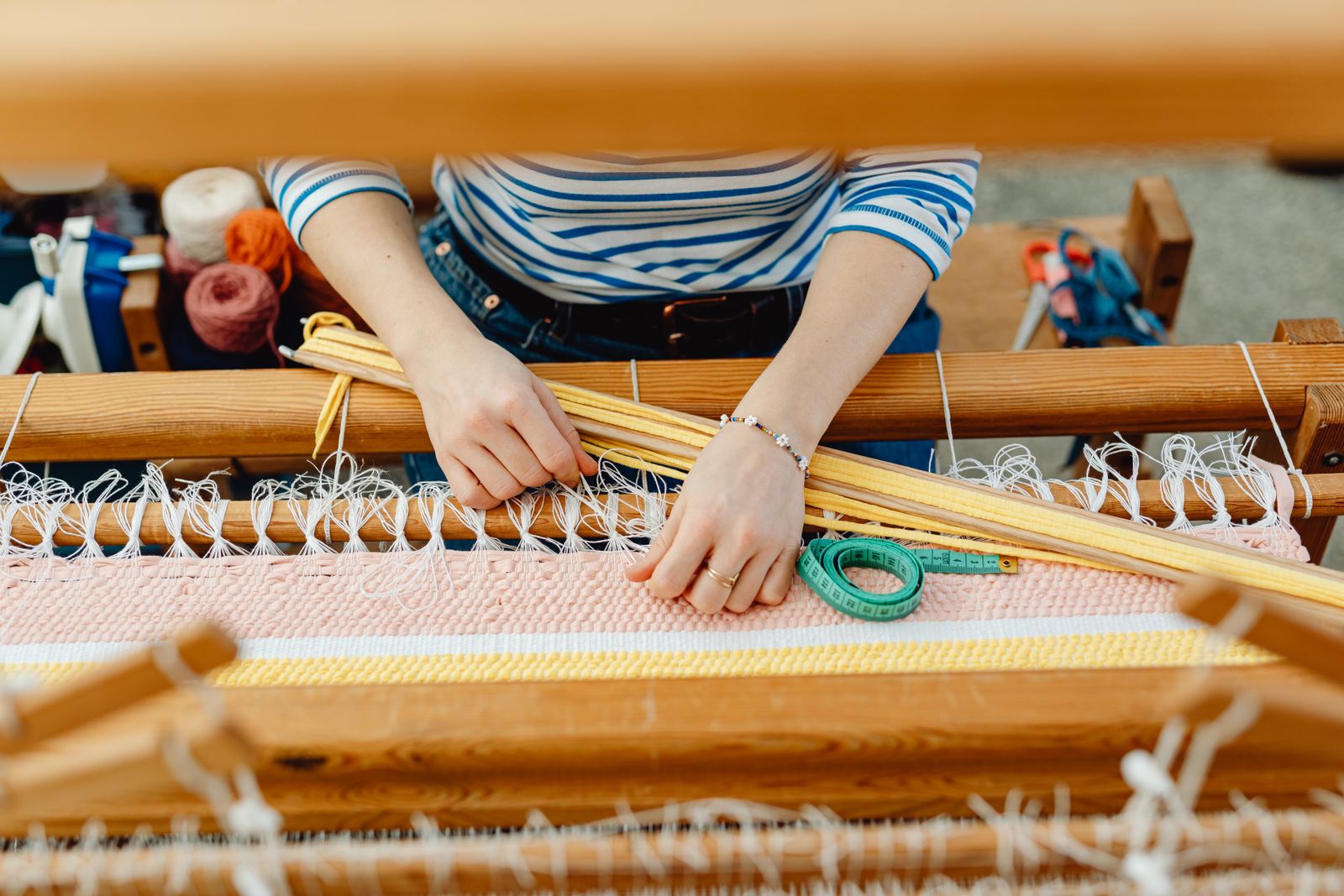
Set the loom wider than the size you want, because finished cloth is always narrower than the weaving width. Take-in pulls the edges inward by about 8 to 12 percent, and a first wash removes another 5 to 10 percent. To finish at 16 to 18 inches for a dish towel, plan a weaving width near 18 to 20 inches.
Take-in is the central fact of width planning. Warp threads run straight; weft threads do not. Each weft pick bends over and under every warp end as it crosses the shed, and those bends pull the selvedges inward. At 10 percent take-in, a 26-inch weaving width produces 23.4 inches of cloth off the loom; a first cotton wash lands it near 21 to 22 inches. The most common loom-buying mistake follows from ignoring this: picturing the largest project you might ever weave rather than the one you will weave most. A 15-inch rigid heddle covers four of every five standard beginner projects. A 26-inch floor loom covers almost everything through small throws. The rest is overhead.
How do you calculate weaving width from a finished size?
Work backward in two steps: account for take-in, then account for shrinkage.
Step 1: take-in. Divide your desired finished width by (1 minus take-in rate). At 10 percent:
- Target: 18-inch finished dish towel
- 18 ÷ 0.90 = 20 inches of weaving width needed
Step 2: shrinkage. If you will wash the project in hot water, or if the fiber is known to shrink (wool, unmercerized cotton, linen), divide the step-1 result by (1 minus shrinkage rate). At 5 percent:
- 20 ÷ 0.95 = 21.1 inches; round up to 21 to 22 inches of weaving width
Take-in also varies by weave structure. Plain weave averages 10 percent. Twills run slightly lower. Weft-heavy tapestry and rep weave can exceed 15 to 20 percent. The table below uses plain weave at 10 percent take-in and 5 percent shrinkage (one cotton wash cycle) as the baseline. Adjust upward for dense structures or wool.
All of this math depends on measuring the same way every time. A stretchy dressmaker’s tape gives a slightly different number each time it’s pulled; a rigid fiberglass tape measure holds its length under tension and keeps take-in and finished-width readings consistent from warp to warp.
As an Amazon Associate, Wool Hall earns from qualifying purchases, at no extra cost to you.
What weaving width does each project need?
Match the finished width you want to the weaving width you must set on the loom. The table below pairs both for common projects, using plain weave at 10 percent take-in and 5 percent shrinkage as the baseline.
| Project | Typical Finished Width | Weaving Width Needed |
|---|---|---|
| Narrow scarf / muffler | 6 to 8 inches | 8 to 10 inches |
| Standard scarf | 8 to 12 inches | 10 to 14 inches |
| Wide scarf / wrap | 18 to 22 inches | 20 to 25 inches |
| Napkin | 10 to 14 inches | 12 to 16 inches |
| Table runner (narrow) | 10 to 12 inches | 12 to 14 inches |
| Table runner (standard) | 13 to 15 inches | 15 to 17 inches |
| Placemat | 12 to 14 inches | 14 to 16 inches |
| Dish towel / hand towel | 14 to 18 inches | 16 to 20 inches |
| Baby blanket | 28 to 36 inches | 31 to 40 inches |
| Lap blanket / small throw | 44 to 50 inches | 49 to 56 inches |
| Full throw | 50 to 60 inches | 56 to 67 inches |
Two notes on the extremes: bath towels finish at 27 to 30 inches wide and need a weaving width of 30 to 34 inches, which is beyond most rigid heddle looms and at the upper limit of entry-floor-loom range. Full-size blankets wider than 54 inches are usually woven in two panels seamed at the center rather than on a single very wide loom, which keeps the equipment cost manageable.
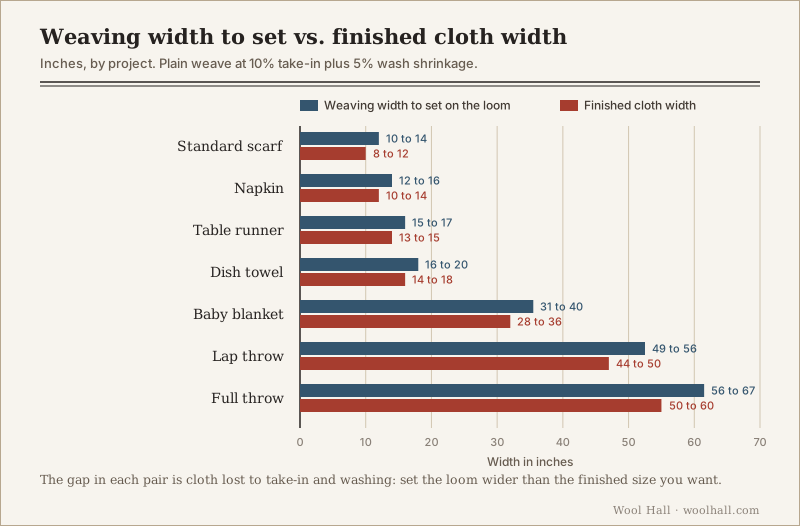
For each project, the indigo bar is the weaving width to set on the loom and the shorter madder bar is the finished width; the gap is the cloth lost to take-in and one wash. Set the loom wider than the size you want. Wool Hall original diagram.
Which projects does each common loom width cover?
In short: a 10-inch loom covers narrow scarves, 15 inches reaches scarves through placemats, 20 to 24 inches adds dish towels and baby items, and a 26-inch floor loom covers almost everything through small throws. The breakdown by width follows.
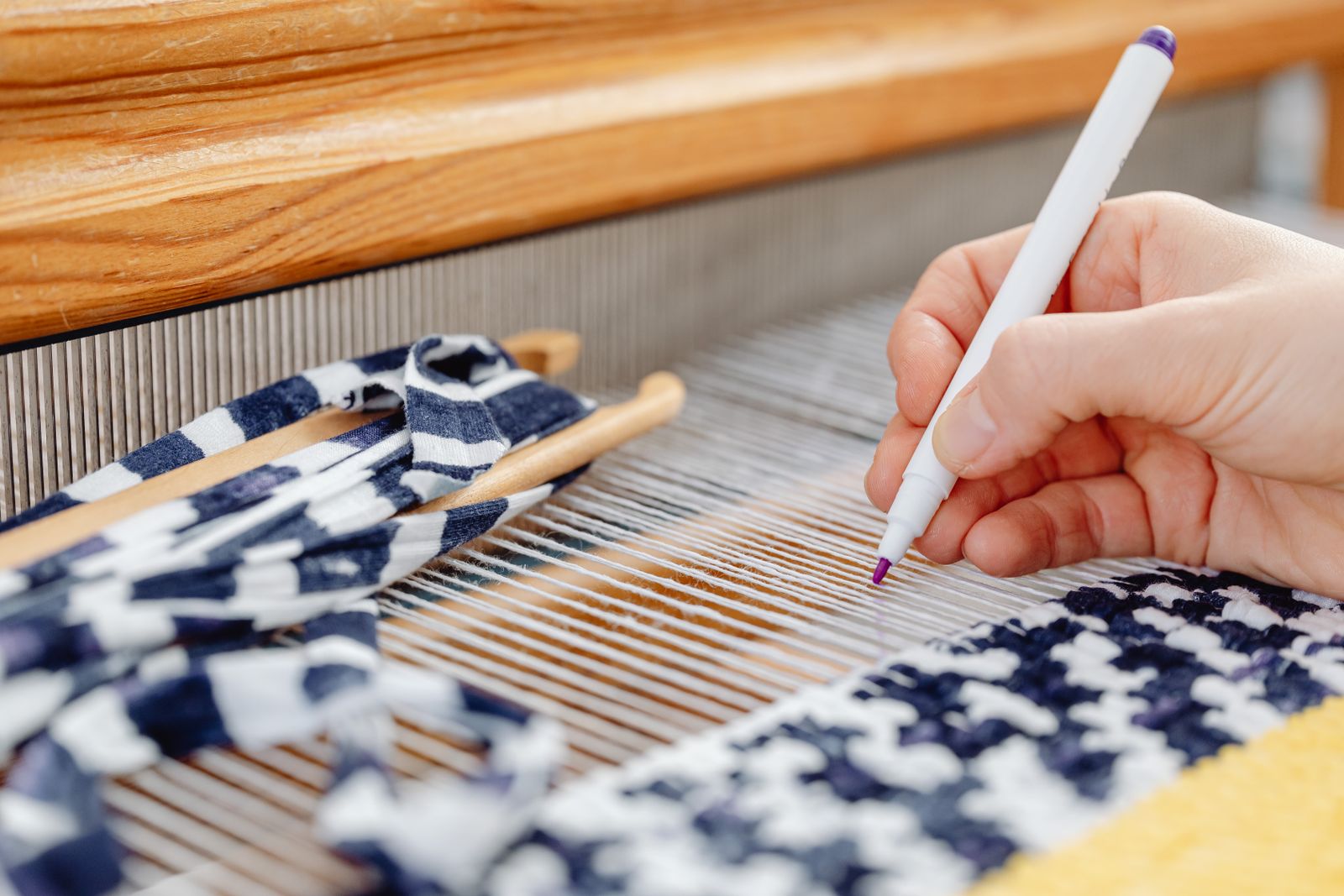
Working the rigid heddle across the weaving width. That distance from selvedge to selvedge, measured in inches, is the stated weaving width of the loom and the starting point for all finished-size math. Photo: Karola G (kaboompics.com) via Pexels. Pexels License.
10 inches (Schacht Cricket 10”)
The Schacht Cricket 10-inch produces finished cloth about 8 to 9 inches wide after take-in. That covers narrow scarves, mufflers, hat bands, and ribbon scarves. It will not produce a standard 10-inch-wide scarf or anything wider, and it can’t make a kitchen towel either: 8 to 9 inches of finished cloth is closer to a washcloth than a dish towel. Buy the 10-inch if narrow scarves and samples are genuinely the main focus, and step up to 15 inches if any flexibility in project range matters, or straight to 20 inches if towels are the actual goal.
15 inches (Schacht Cricket 15”, Ashford Knitters Loom 16”)
Fifteen inches is the most common first-loom weaving width for good reason. Finished cloth runs about 13 to 14 inches, which covers standard scarves, table runners, napkins, and placemats. It falls one to two inches short of standard dish-towel width; you can weave a narrow kitchen towel at 15 inches but the finished piece lands around 13 inches, which is on the narrow side. For most beginners, 15 inches is the right balance of project range and cost.
The Schacht Wolf Pup LT at 18 inches splits the difference between the Cricket 15” and a 20-inch loom, adding just enough width for dish towels while staying in folding-loom territory.
20 to 24 inches (many rigid heddle and table loom options)
Twenty to twenty-four inches opens dish towels (18-inch finished), wide runners, wide wraps, and the beginning of baby items. At 24 inches weaving width, finished cloth runs about 21 to 22 inches. That is enough for a receiving blanket, a wide wrap, or narrow panels for a baby quilt. The jump from 15 to 20-plus inches is the first major project-range expansion and typically worth the upgrade if dish towels are a regular goal.
26 inches (Schacht Baby Wolf, Louet David III 70cm)
Twenty-six inches is the most versatile single floor-loom width for a beginner. The Schacht Baby Wolf at 26 inches produces finished cloth 23 to 24 inches wide. That covers everything in the table above through wide wraps, and reaches baby-blanket territory for smaller blankets. Most household projects fit within 26 inches. It does not make full-size throws without panel seaming, but it covers several years of weaving for most people without requiring a second loom.
36 to 45 inches (wider floor looms)
This range is where throws and single-panel yardage become possible. A 40-inch weaving width produces finished cloth about 36 inches wide, enough for a lap blanket in a single panel. A 45-inch loom produces about 40 inches finished, which reaches some sewing-pattern cutting widths. Looms in this range are significantly larger and more expensive; the room they require grows accordingly. Buy here if regular throw weaving or garment-fabric production is the stated goal, not a hypothetical future project.
54 inches and above
Full-width throw and blanket territory, and the beginning of standard sewing-fabric widths at 44 to 60 inches. For most hobby weavers, two-panel construction on a narrower loom is more practical than purchasing a wide floor loom for occasional blanket projects.
Why is buying too wide the most common mistake?
Because a too-wide loom sits expensive and underused: most weavers buy for the largest project they imagine, then spend years working scarves and towels at a third of the available width. Buy for your average project, not your largest hypothetical one.
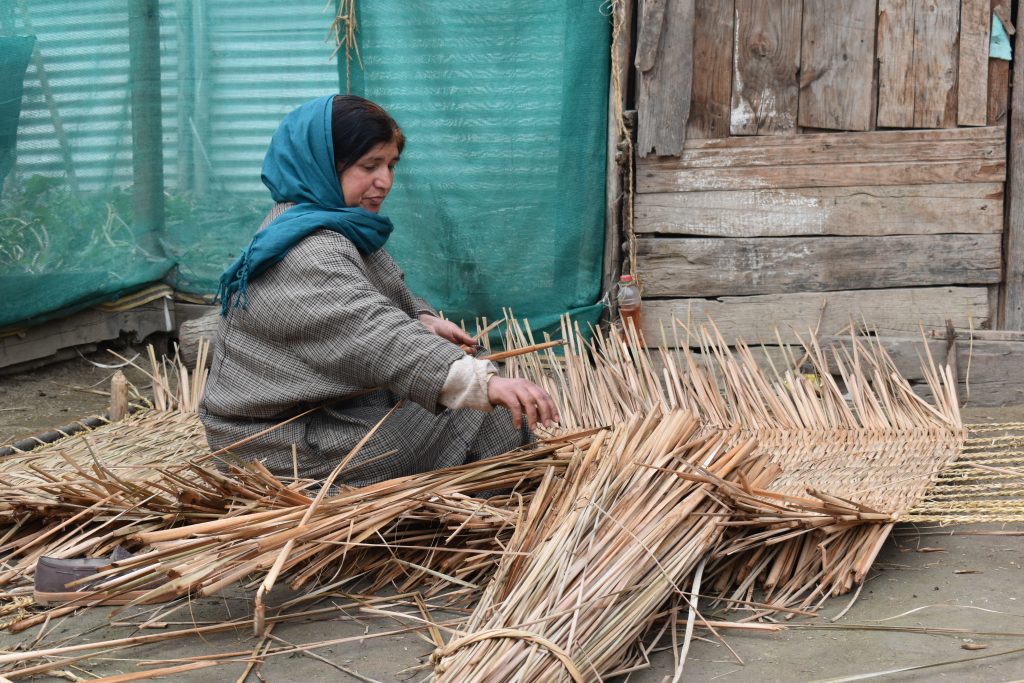
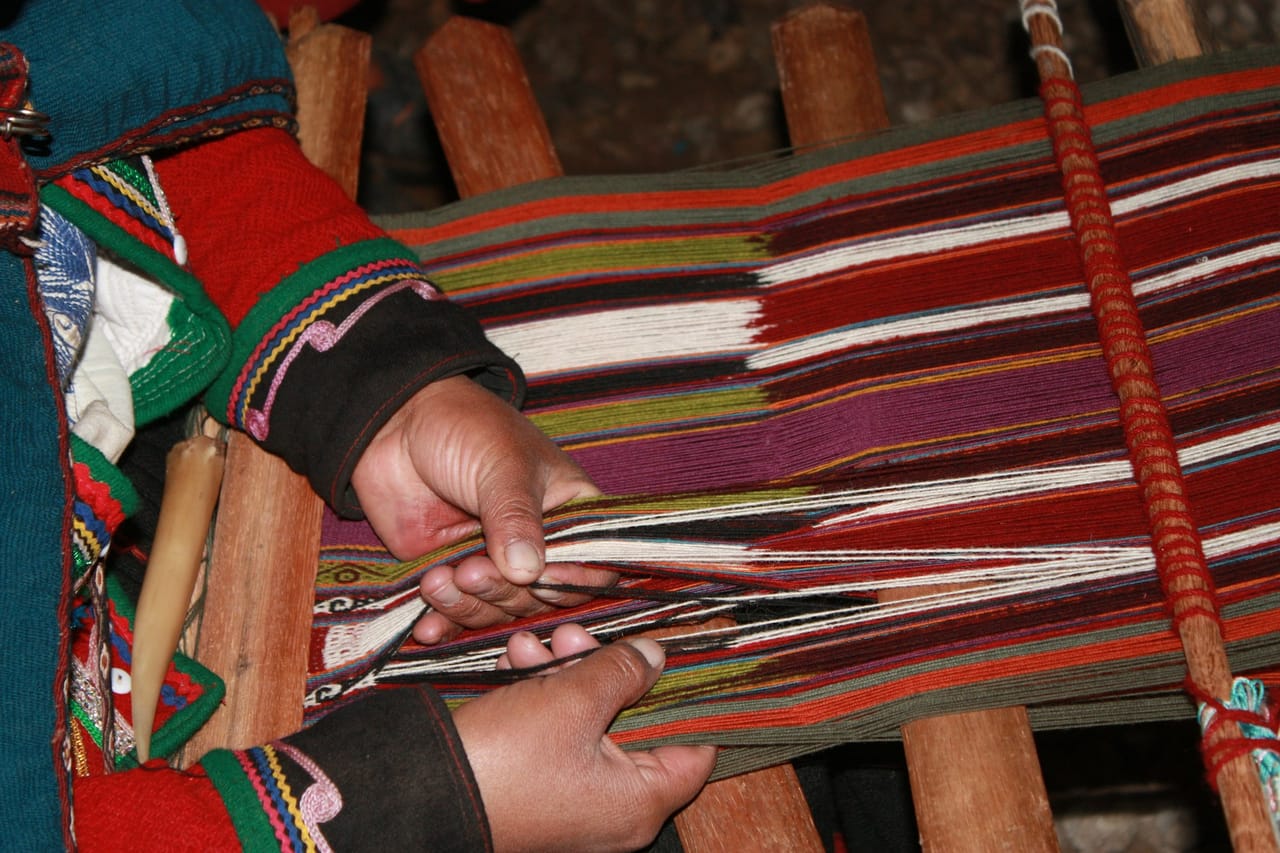
Weaving Wagoo cloth on a narrow traditional loom in Sudan. Traditional narrow-loom weaving produces cloth in strips that are seamed together for garments and furnishings. Many contemporary handweavers use the same panel-seaming technique for wide throws and blankets, which often eliminates the need for a wide loom entirely. Photo: Shaima alghanay via Wikimedia Commons. CC BY-SA 4.0.
The rigid heddle vs floor loom decision comes up often, and so does this parallel question about width. Both share the same failure mode.
A new weaver lists every project they might ever want to make, finds the widest one on the list (usually a full-size blanket), and buys a loom sized for that project. Then 90 percent of actual weaving happens at scarves, towels, and table runners, all of which would have fit on a much narrower loom. The wide loom sits expensive and underused, and every narrow project wastes setup time threading a loom that is too wide for the work.
The alternative: buy for your actual average project. If you mostly imagine weaving scarves and trying a towel, start at 15 inches. If dish towels are a core project, buy 20-plus inches. If blankets are on the plan, a 26-inch floor loom with panel seaming covers throws; wider only if you want single-panel blankets with no center seam.
Width is also easier to add later than to subtract. A weaver who outgrows a 15-inch rigid heddle has a clear upgrade path to a 24-inch rigid heddle or a floor loom. A weaver who bought a 40-inch floor loom for beginner projects has a more expensive problem.
Do you need a wide loom for sewing yardage?
For most garments, no. Sewing patterns assume 44 to 60 inches of commercial fabric width, but handweavers traditionally weave narrow cloth and seam panels together. Panel-joining on a 24-to-26-inch floor loom covers most garment projects without a wide loom.
Overhead view of handwoven cloth on a rigid heddle loom. Every inch of warp counts toward the finished cloth width; this overhead perspective shows how the full weaving width translates directly to the fabric width available for cutting. Photo: Guido Coppa via Unsplash. Unsplash License.
Handwoven cloth on entry-level looms rarely reaches those commercial widths, which leaves two options: buy a very wide loom, or use panel-joining construction.
Panel-joining means weaving two lengths of cloth at half the needed finished width, sewing them together, and cutting the garment pattern from the joined piece. This is how medieval weavers made fabric for clothing and how many African textile traditions still produce garment cloth today. A seam down the center back of a garment is invisible once sewn. For most handwoven garment projects, panel joining on a 24-to-26-inch floor loom is more practical than purchasing a 60-inch loom.
The exception is fabrics where a center seam is genuinely unacceptable: some overshot patterns that need to mirror precisely across the center, wide table linens that must be seamless, or production runs where seam-joining labor cost becomes a constraint. For those, a wide loom is justified. For everything else, seam.
Using this table when buying
Three questions to settle before choosing a loom width:
- What is the narrowest project you want the loom to cover? That is the floor; any loom narrower than this is ruled out immediately.
- What is the project you will weave most often? That is the sweet spot; size the loom for this one, not for occasional outliers.
- Are blankets or single-panel garment fabric in the regular plan? If yes, decide whether panel joining is acceptable. If not, determine the minimum loom width that covers the required finished size.
Most beginners answer: scarves plus towels, maybe a small baby item. That maps to 18 to 24 inches of weaving width. A 15-inch rigid heddle covers the scarves and table runners; a 20-to-24-inch rigid heddle or a 26-inch Baby Wolf covers the full range.
One last check: weaving width as stated on loom spec sheets is the maximum usable width, not the typical working width. Most weavers use 80 to 90 percent of the stated width to maintain clean selvedges and room for the shuttle to turn. A 26-inch loom’s practical working width is about 22 to 24 inches. The gap between a 20-inch rigid heddle and a 26-inch floor loom in practical working width is narrower than the specs suggest.