Schacht Baby Wolf Review: The Institutional Floor Loom
The Baby Wolf at $2,386 fits through a standard door. Spec table, owner reports, Hall Records used prices, and a clear routing table for who should buy it.
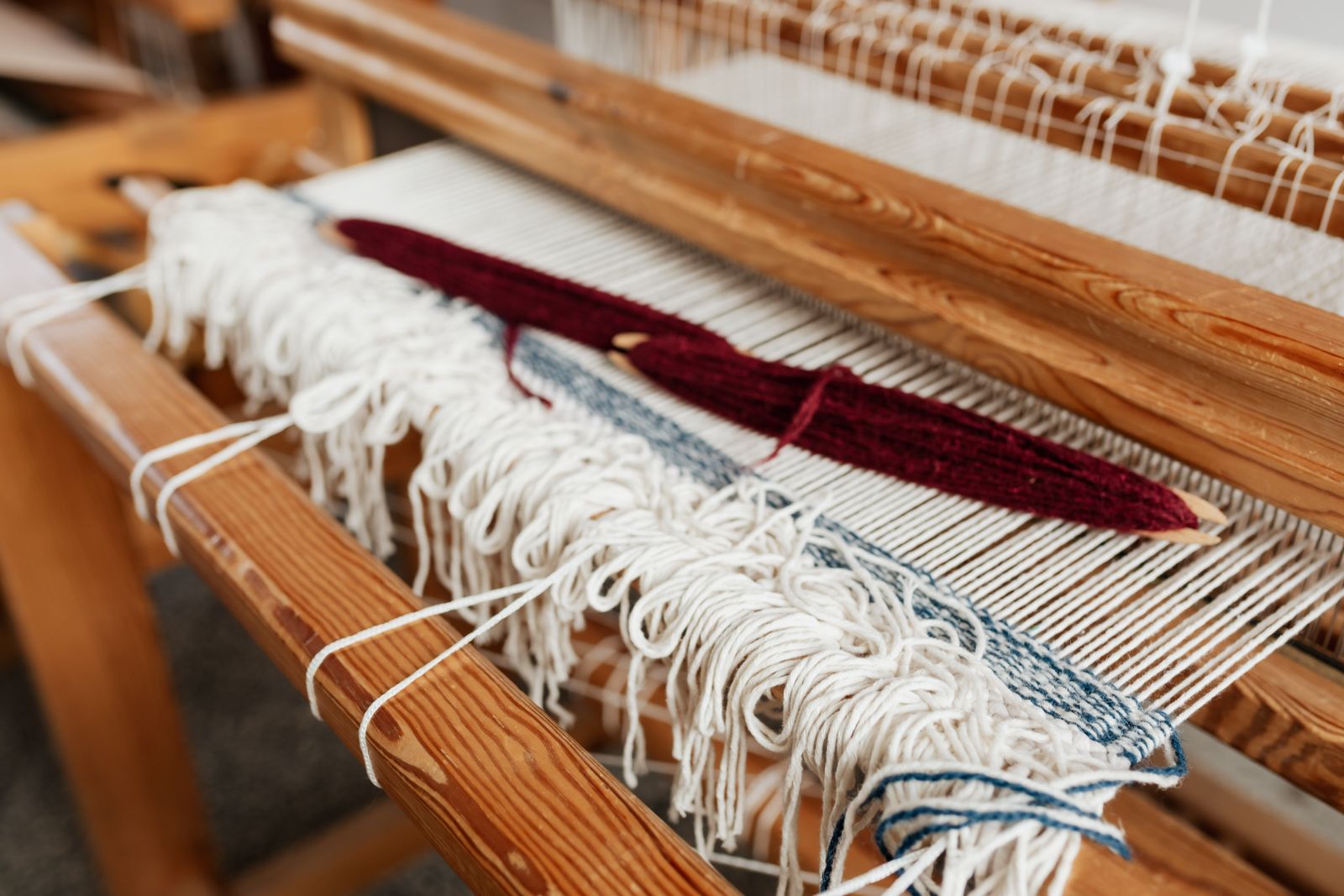
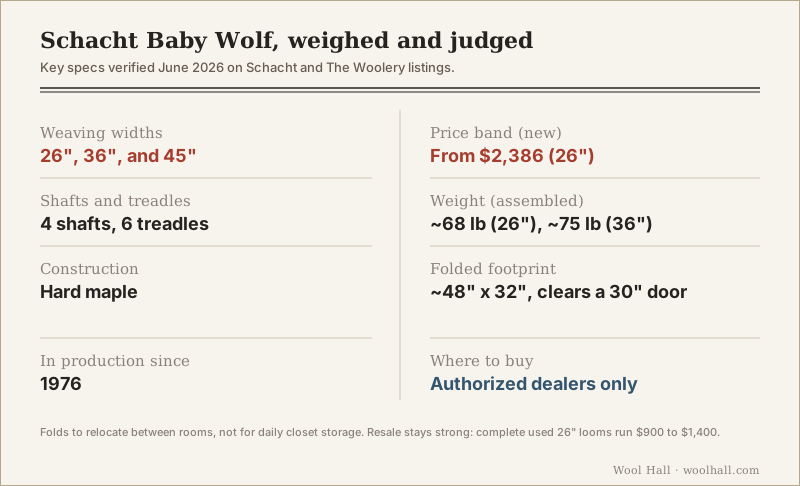
The Schacht Baby Wolf is the most-recommended first floor loom in US weaving, and the reputation is earned. It starts at $2,386 for the 26-inch 4-shaft model, weighs 68 pounds, folds to pass through a 30-inch doorway, and has been built in hard maple since 1976. The one caveat is what it is not.
Weighed & Judged
| Spec | Baby Wolf (4-shaft, 26”) | Baby Wolf (4-shaft, 36”) |
|---|---|---|
| Weaving width | 26” | 36” |
| Weaving depth | 54” | 54” |
| Folded dimensions | ~48” × 32” | ~48” × 40” |
| Weight (assembled) | ~68 lbs | ~75 lbs |
| Number of shafts | 4 | 4 |
| Number of treadles | 6 | 6 |
| Tie-up method | Schacht direct tie-up | Schacht direct tie-up |
| Reed type | Inserted reed | Inserted reed |
| Beam type | Sectional or plain | Sectional or plain |
| Folding | Yes (doorway-ready) | Yes (doorway-ready) |
| Construction | Hard maple | Hard maple |
| Price (new, 2026) | From $2,386 | Higher |
| Dealer-only | Yes | Yes |
The 6 treadles on a 4-shaft loom is a considered design. Six treadles allow a direct tie-up that covers the most common 4-shaft structures (twills, plain weave, and most overshot treadlings) without re-tying between projects. Weavers doing multi-block patterns that need more than six treadle combinations will re-tie for specific projects; for everyday weaving, six is the right number.
The hard maple construction is the same material as the Cricket and the Wolf Pup. Schacht’s quality control on maple selection and joint fitting is consistent across the line, which is why Schacht floor looms have a long useful life and hold resale value better than comparable-price competitors.
You will not find the Baby Wolf on Amazon. Schacht sells exclusively through authorized dealers, The Woolery, Halcyon Yarn, Gist Yarn, and local weaving shops, at prices that vary slightly by dealer but track close to the $2,386 retail figure above; the figures in this review are retail, not sale prices. That is standard for the whole class of floor loom: Schacht, Leclerc, and Macomber all sell the same way once you’re above roughly $1,500.
What do owners say about the Baby Wolf?
Owners consistently describe it as forgiving and well-supported: assembly takes about a day, warping is straightforward, and the treadle action is light and predictable. Ravelry’s equipment forums carry several hundred posts on Baby Wolf experience across the 2023 to 2025 period. The consistent themes:
Assembly takes a day. Most owners report 4 to 8 hours for first assembly, working from Schacht’s written and video instructions. The instructions are accurate. The joints are wood-on-wood and fit precisely; the most common delay is hesitating at the treadle tie-up rather than a mechanical problem. Second and third assembly (after moving) typically runs 2 to 3 hours.
Warp chains are easy. The back beam, tensioning system, and lease sticks work straightforwardly. Direct-from-hand-warping is possible; most Baby Wolf owners learn the warping-board method within the first few warps.
Treadle action is light. A common comparison from weavers who have used other brands: the Baby Wolf’s treadle feel is lighter than a Macomber or Nilus, heavier than a Toika or Glimakra. Most weavers describe it as “predictable” without strong positive or negative valence.
The folding works. The breast beam folds down, the beater lifts off, and the treadles fold up, collapsing the loom enough to clear a standard 30-inch doorway. It is not built for compact daily storage the way a Cricket is; it folds to relocate between rooms or apartments, and most owners set it up once and leave it. The complaint that occasionally surfaces in forums is not that folding is hard, but that it is slightly time-consuming (perhaps 15 minutes) compared to leaving the loom in place. Weavers who fold frequently (apartment dwellers, those with shared studio space) report this is fine. Weavers who assumed the loom would fold to a small closet footprint are sometimes surprised; the folded dimensions are still substantial.
Is the Baby Wolf worth its price per inch?
Measured against other floor looms it is, but never against a rigid heddle: the floor loom buys structure, not width. At $2,386 for 26 inches, the Baby Wolf costs $91.77 per inch of weaving width. At the 36-inch model, the math improves. For comparison, the Ashford 24-inch Rigid Heddle Loom is $13.13 per inch, but that comparison is the wrong one. A rigid heddle makes plain weave and simple float patterns. A floor loom makes twills, overshot, deflected doubleweave, and anything else 4-shaft weaving can produce. The comparison that matters is Baby Wolf against other floor looms in the same class.
| Floor loom | Weaving width | Approx. price (new) | Notes |
|---|---|---|---|
| Schacht Wolf Pup LT | 18” | $1,963 | Entry; narrower projects, folds to 16” depth |
| Schacht Baby Wolf | 26” | ~$2,386 | Standard 4-shaft compact |
| Schacht Baby Wolf | 36” | Higher | Wider yardage |
| Leclerc Nilus II | 36” | ~$2,000–$2,500 | Common alternative; Canadian manufacture |
| Macomber Add-a-Harness | 36” | ~$3,000+ | Robust; expandable to 8 shafts |
The Wolf Pup LT undercuts the Baby Wolf on both price and footprint, but it’s built for a different job: narrower work, scarves, kitchen towels, samplers. The Baby Wolf is built for production weaving, towels, yardage, clothing, blanket panels, at a width the Wolf Pup can’t reach. Most weavers moving up from rigid heddle skip the Wolf Pup and buy a Baby Wolf directly; the width ceiling is the more common regret than the extra cost.
The Baby Wolf and Nilus II are the two most-recommended entry floor looms in the US and Canadian market. Schacht and Leclerc both have strong dealer networks, good support, and long production histories. The choice often comes down to aesthetic preference (the Baby Wolf’s maple vs. the Nilus’s oak finish) and dealer proximity for assembly help or follow-up service.
Hall Records: how much do used Baby Wolf looms cost?
Complete 26-inch Baby Wolves typically sell used for $900 to $1,400 (full figures below), and the loom holds resale value unusually well for studio equipment. Reasons: it is in continuous production (not discontinued, not “vintage”), demand consistently outpaces supply on the used market, and the hard maple construction means a well-kept 20-year-old Baby Wolf is mechanically equivalent to a new one.
Typical used prices observed 2024–2025:
- 26” 4-shaft, complete with reed and accessories: $900 to $1,400
- 36” 4-shaft, complete: $1,200 to $1,800
- Incomplete sets or project looms: $500 to $900
The used market for Baby Wolves is active primarily through Ravelry’s For Sale forums, estate sales listed through local weaving guilds, and Facebook Marketplace listings in fiber-arts groups. Craig’s List finds are rarer but exist, usually priced at the lower end by sellers who are not weavers.
A used Baby Wolf at $900 to $1,100 complete is one of the best values in weaving equipment if the condition is sound. What to inspect: warping beam and front beam for cracks at the tenon joints, treadle bar connection points for wear, and the reed (if included) for bent dents. A Baby Wolf with sound maple and a worn reed is a straightforward buy; reeds are sold separately by Schacht dealers for under $100.
Choose the Baby Wolf instead of the Nilus if…
You want direct buy-in to the Schacht accessory ecosystem (the Baby Wolf and Cricket share compatible accessories), you prefer the folding design for a shared-space studio, your dealer is Schacht-primary, or you simply prefer maple to the Nilus’s construction style.
Choose the Nilus instead of the Baby Wolf if…
Your local dealer is Leclerc-primary (service and parts proximity matters more than brand), you want slightly lower new price at comparable widths, or you prefer the Nilus’s wider treadle spacing.
Choose something other than either if…
You want 8-shaft weaving from the start. The Baby Wolf is a 4-shaft loom (an 8-shaft version exists but is less common and not the entry model). If you already know you want double-weave, network drafts, or advanced overshot, look at the Macomber Add-a-Harness or a direct 8-shaft loom like the Schacht Cranbrook.
You want to weave blankets wider than 45 inches in a single pass. The Baby Wolf’s widest model is 45 inches, which handles most yardage. For wide blankets and doubleweave open cloth, you want a wider loom than the Baby Wolf offers.
For the entry-level rigid heddle context this loom steps up from, see the Schacht Cricket review or the best rigid heddle loom guide. The Cricket Quartet add-on is the intermediate stop between rigid heddle and the Baby Wolf for weavers who are not ready to commit to a floor loom.