How Much Space Does a Loom Need? A Room-Planning Guide
Floor looms run 33 to 54 inches deep; rigid heddle fits any table; spinning wheel needs one corner. Measured footprints and minimum room sizes, loom by loom.
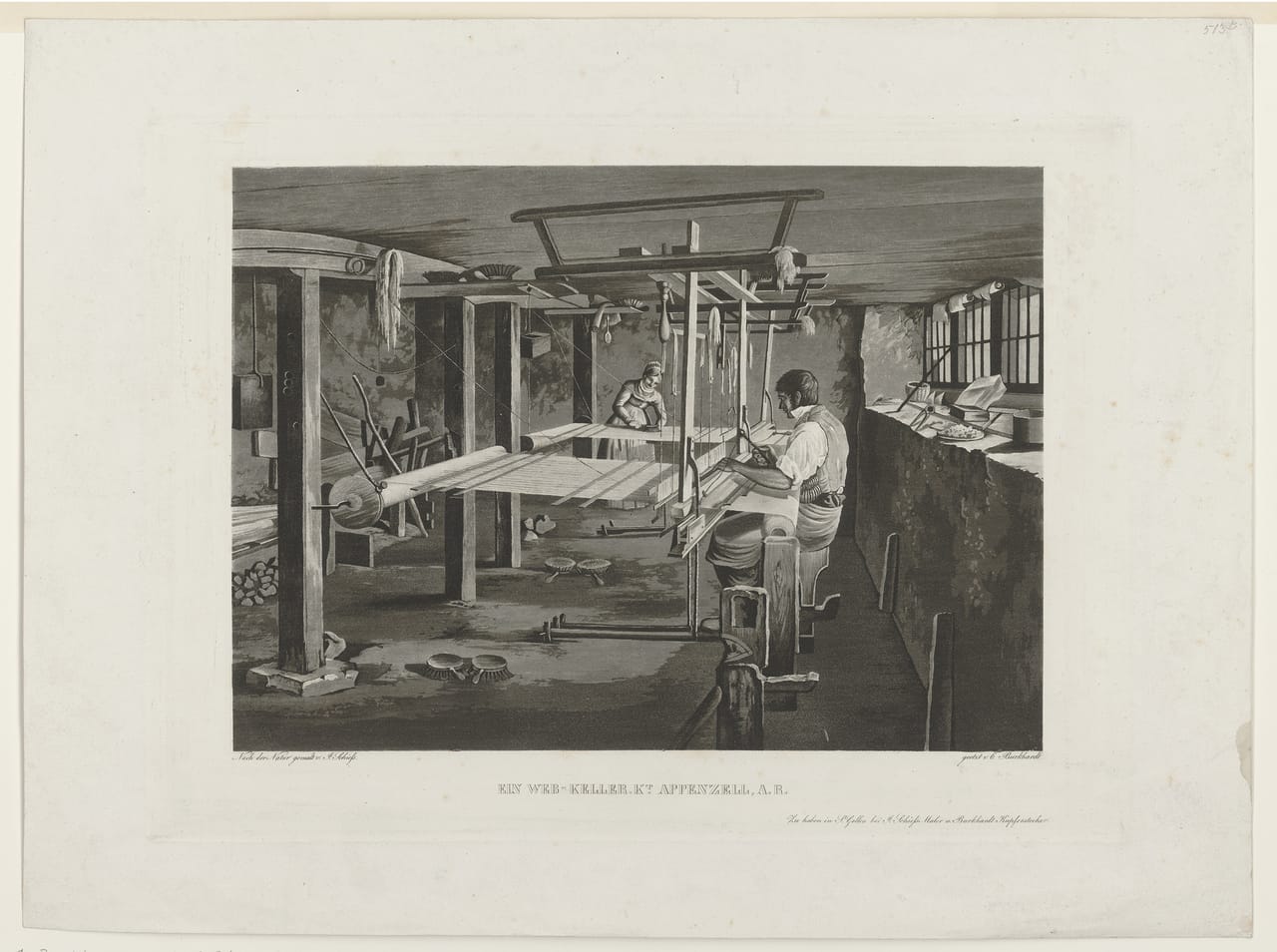
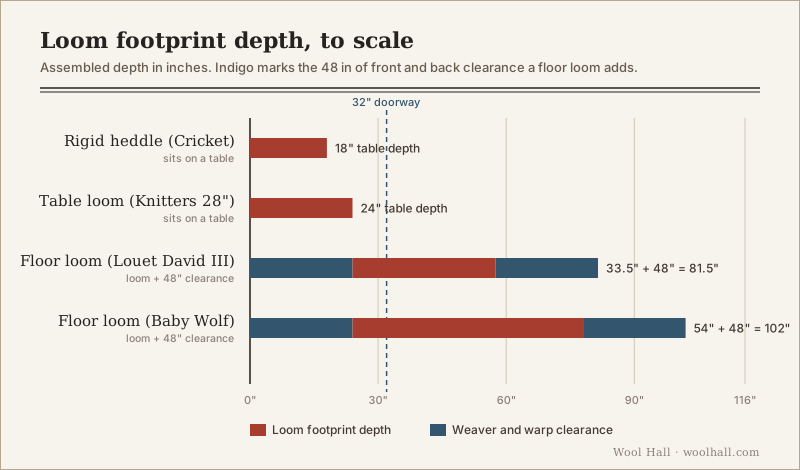
A floor loom needs its assembled depth plus 48 inches of clearance (24 in front, 24 behind), so a 54-inch Baby Wolf wants about 8.5 feet of room depth and a 33.5-inch Louet David III about 6.8 feet. A rigid heddle loom needs only a 24-inch-deep table. A spinning wheel claims roughly a 4-by-3-foot corner.
Why is assembled depth the spec that matters for a floor loom?
Assembled depth is what fills a room, not weaving width. Floor loom listings lead with weaving width, which makes sense for planning projects, but it tells you how wide a cloth you can make, not how much room the loom takes up. The dimension that fills a room is assembled depth: the horizontal distance from the cloth beam at the front to the rearmost point of the warp beam at the back, measured while the loom is in weaving position.
| Loom | Weaving Width | Assembled Depth | Folds? | Storage Depth |
|---|---|---|---|---|
| Schacht Wolf Pup LT | 18” | see manufacturer* | Yes (X-frame) | 16” |
| Schacht Baby Wolf | 26” | 54” | Yes | passes 30” doorway |
| Louet David III (David 70) | 27.6” | 33.5” | No | n/a |
| Louet David III (David 90) | 35.4” | 33.5” | No | n/a |
*Wolf Pup LT assembled depth not listed in accessible manufacturer documentation as of June 2026. The loom folds to 16 inches deep on built-in wheels for storage; see schachtspindle.com/products/wolf-pup-lt/ for current assembled depth.
The 20-inch gap between the Baby Wolf and the David III is the central argument in the floor loom comparison. Fifty-four inches is nearly five feet of loom. Add 24 inches of clearance in front and 24 inches behind, and the Baby Wolf demands roughly 8.5 feet of room depth before a weaver can sit down. The David III’s 33.5 inches, with the same clearances, needs about 6.8 feet. In a 10-foot room that is the difference between comfortable and cramped.
How much clearance does a floor loom need around it?
Plan on 24 inches in front, 24 inches behind, and 18 inches per side, on top of the loom’s own depth and width. Here is what each clearance is and why it matters:
Front clearance (weaver position): 24 inches is the practical minimum for a chair or bench positioned in front of the breast beam. Comfortable weaving with room to shift and reach past the selvedge needs closer to 30 inches. Measure from the breast beam forward.
Back clearance (warp beam access): 24 inches behind the rear of the warp beam. During setup you need to walk to the back of the loom to thread heddles from behind, tie on, and check warp tension. During weaving you advance the warp by releasing the warp beam brake, usually operated from the side, then rolling forward. An alcove wall at 18 inches works if the brake is side-accessible, but 24 inches is the safer figure for general use.
Side clearance: 18 inches per side, or 36 inches total added to the loom’s weaving width. You reach past the selvedge to adjust tension and check the fell line; 18 inches gives room for that without the loom pressing against a wall. For looms wider than 26 inches, 24 inches per side is more comfortable.
None of this applies to a rigid heddle loom or a spinning wheel. Neither has a back-of-loom warp beam to walk around, so both can sit within inches of a wall on their non-working sides.
What is the minimum room size for a floor loom?
A Baby Wolf needs a 9-by-6-foot space at minimum; a David III works in 7-by-6. The figures below come from the verified assembled depths above plus the clearance guidelines, which reflect standard ergonomic recommendations for floor loom operation.
Schacht Baby Wolf (26”, 54” assembled depth):
- Room depth minimum: 24” front + 54” loom + 24” back = 102 inches (8.5 ft)
- Room width minimum: 26” + 18” + 18” = 62 inches (5.2 ft)
- Practical minimum room: 9 ft deep x 6 ft wide
- Comfortable dedicated studio: 10 ft x 8 ft
Louet David III (David 70, 27.6”, 33.5” assembled depth):
- Room depth minimum: 24” + 33.5” + 24” = 81.5 inches (6.8 ft)
- Room width minimum: 27.6” + 18” + 18” = 63.6 inches (5.3 ft)
- Practical minimum room: 7 ft deep x 6 ft wide
- Comfortable dedicated studio: 9 ft x 7 ft
Schacht Wolf Pup LT (18”, assembled depth see manufacturer): The Wolf Pup LT folds to 16 inches for storage on built-in casters. Its assembled weaving depth is not in accessible manufacturer documentation as of June 2026. Given the X-frame design and 18-inch weaving width, expect a smaller total room requirement than the Baby Wolf. Verify the assembled depth at schachtspindle.com before planning your space.
These figures assume the loom is the only major furniture in the space. A dedicated spare bedroom usually accommodates one floor loom plus warping board and storage at the sizes above. A shared room requires measuring with all existing furniture in place.
A small apartment can still work, with the right loom. The David III’s 33.5-inch depth fits a dedicated alcove or a large walk-in closet at 7 feet deep minimum. The Baby Wolf folds to pass through a 30-inch doorway for moving between rooms, though it still needs the full 54 inches once it’s assembled and weaving. A rigid heddle loom on a stand is the easiest apartment fit of all: it fits almost anywhere and stores vertically when not in use.
How much space does a rigid heddle loom need?
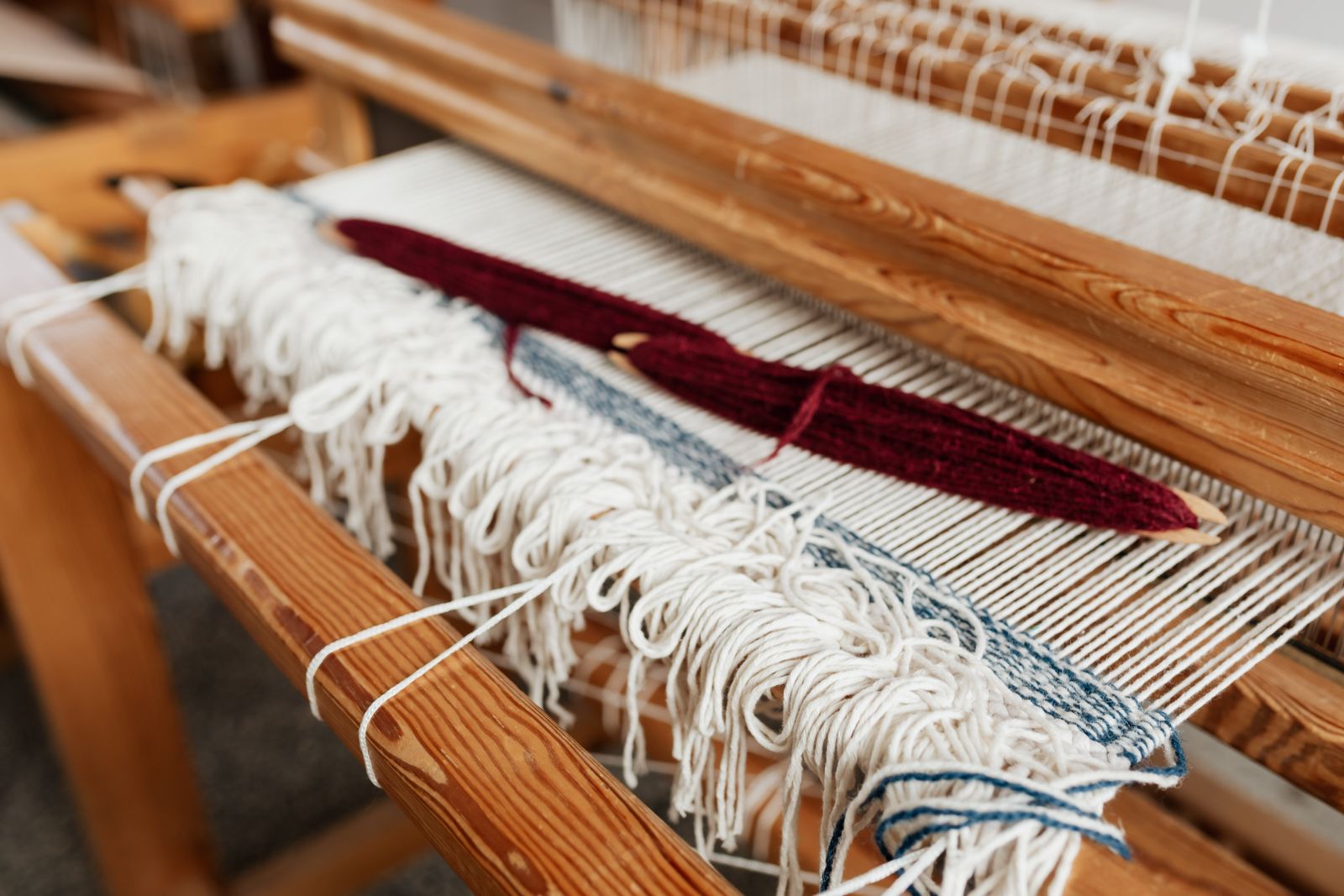
A table at least 24 inches deep, plus 24 to 30 inches in front for a chair. A rigid heddle loom has no floor footprint of its own: it sits on a table, a floor stand, or the weaver’s lap, so the planning question becomes what table and how much space in front of it.
| Loom | Weaving Width | Unfolded Footprint | Weight | Notes |
|---|---|---|---|---|
| Schacht Cricket 10” | 10” | 18” L x 13.4” W | ~6 lbs | Attaches via clamps |
| Schacht Cricket 15” | 15” | slightly wider | ~6-7 lbs | Same construction |
| Ashford Knitters Loom 12” | 12” | 12” x 16” | ~3 lbs | Folds with carry bag |
| Ashford Knitters Loom 28” | 28” | 24” x 24” | ~5 lbs | Folds with carry bag |
| Kromski Harp Forte 16” | 16” | table-top | see manufacturer | Folds in half |
A standard desk at 24 inches deep handles the Cricket 10” with space to spare. The Ashford Knitters Loom 28” at 24 by 24 inches needs a table at least 24 inches in both dimensions, which most dining tables meet but most side tables do not.
Weaver clearance in front of the table is the same regardless of loom size: 24 to 30 inches for a chair. If the loom is on a floor stand rather than a table, the stand adds about 6 to 12 inches of foot spread on each side, so a stand setup in a tight room should be measured before buying the stand. A rigid heddle loom stored on a stand can usually be turned vertical or folded flat when not in use, which a floor loom cannot.
How much space does a spinning wheel need?
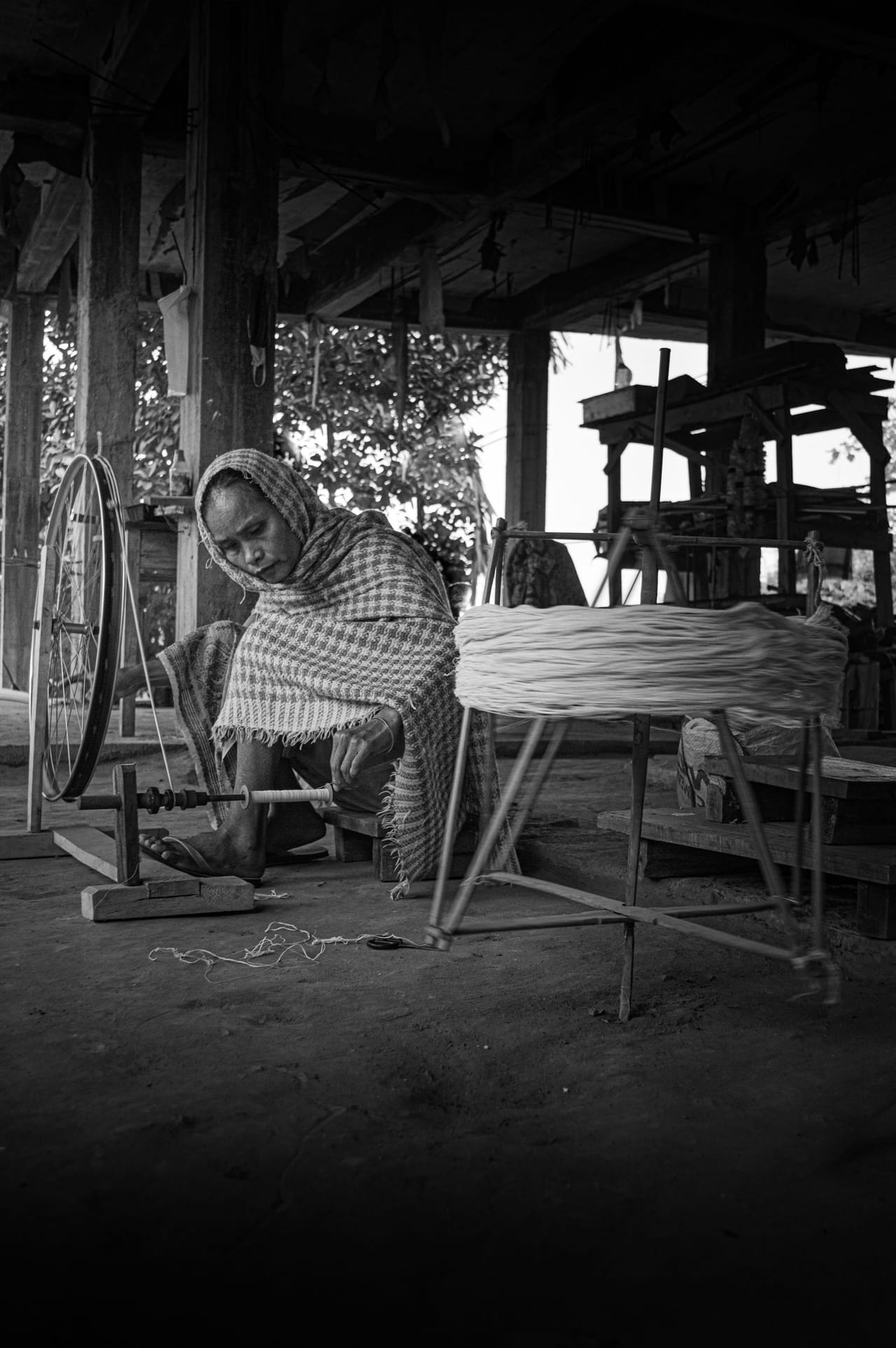
A castle-style wheel needs about a 4-by-3-foot station; a wider Saxony wheel needs closer to 4 by 5 feet. Spinning wheels come in two layouts, and the layout determines the floor footprint more than any single dimension.
Castle-style wheels (Schacht Ladybug with 16-inch wheel, Ashford Kiwi 3) mount the flyer above the drive wheel on a vertical frame. The footprint is roughly 20 to 24 inches wide and 24 to 30 inches deep for the wheel and treadle together. A spinner’s chair positioned beside or slightly in front of the wheel adds another 20 to 24 inches of width. Total spinning station for a castle wheel: roughly 4 feet wide by 3 feet deep. A castle wheel fits in a corner, with the wall behind it and one side, in a way that a floor loom cannot.
Saxony-style wheels (Ashford Traditional with 22-inch wheel) use a horizontal layout with three legs spread across the floor. The drive wheel sits in the center; the mother-of-all and flyer extend outward on a horizontal arm. The Saxony stance is wider than a castle wheel’s, typically 30 to 36 inches across the legs and 40 to 48 inches from front treadle to back of the wheel, depending on the model. The spinning chair sits at the front, adding another 24 inches forward. A Saxony wheel needs roughly 4 by 5 feet of clear floor.
Other room factors worth measuring
Ceiling height. Floor loom castles on production looms designed for home studios generally stay under 60 inches. The Schacht Baby Wolf castle reaches approximately 58 inches; the Louet David III is similar in height. Standard 8-foot ceilings clear both easily. Low-ceiling rooms below 7 feet should be checked against the specific loom’s castle height spec before you buy, not after it ships.
Doorway clearance for delivery and moving. The Baby Wolf folds to a width that passes through a 30-inch doorway. Most floor looms, including the Louet David III at approximately 37 inches wide at the breast beam, require partial disassembly for standard 32-inch interior doors. Measure every doorway and any stairwell turns between your entry and the intended room before the loom ships. This catches problems no floor plan reveals.
Folding for storage. Not every floor loom collapses. The Baby Wolf and the Wolf Pup LT both fold, the Wolf Pup LT down to 16 inches deep on its built-in casters. The Louet David III does not fold at all and has to stay assembled in whatever room it lives in. Rigid heddle looms fold far more compactly than any floor loom: the Ashford Knitters Loom collapses flat into its own carry bag.
Warping space beyond the back beam. If you warp back-to-front using a floor peg set at the wall, you need floor length equal to your intended warp plus several feet of turnaround. A 10-yard warp with a peg at 8 yards needs 8 feet of clear floor running away from the loom. Front-to-back warping and sectional warp beams reduce this to the back clearance behind the loom, but those methods require their own learning curve.
Electrical. Floor looms, spinning wheels, and rigid heddle looms run without power. A task lamp on a weighted floor stand is worth planning for, and a power strip within reach simplifies a winder or electric bobbin winder. No special circuit is needed; a standard duplex outlet within 6 feet of the loom covers every likely accessory.
Before you buy: measure in tape, then in person
Mark the loom footprint on the floor with painter’s tape before ordering. Include the loom depth, the 24 inches of front clearance, the 24 inches of back clearance, and 18 inches per side. Stand in the weaving position and confirm you have room to shift. Walk to the back and confirm you have room to reach the warp beam.
A used loom narrows the stakes. A Schacht Baby Wolf in good condition runs $900 to $1,400 on the used market, which is a reasonable price to discover whether a 54-inch floor loom fits your room and your weaving practice before committing to a new purchase. The Wolf Pup LT’s compact X-frame design addresses space constraints from the ground up at 18 inches of weaving width. And the Schacht Cricket 10” on a corner of a desk proves the concept for under $300, with no floor footprint at all.
Space tends to clarify priorities faster than reading reviews does. Most weavers who eventually buy a floor loom spend a few years on a rigid heddle first, which is also a good way to accumulate enough weaving practice to know exactly how much loom you actually want.