Weaving Yarn Guide: Sett, WPI, and What Makes a Warp Yarn
Sett is ends per inch; WPI tells you what sett a yarn needs. Covers warp-worthy fibers, the half-sett rule, and where to buy cotton and linen for weaving.
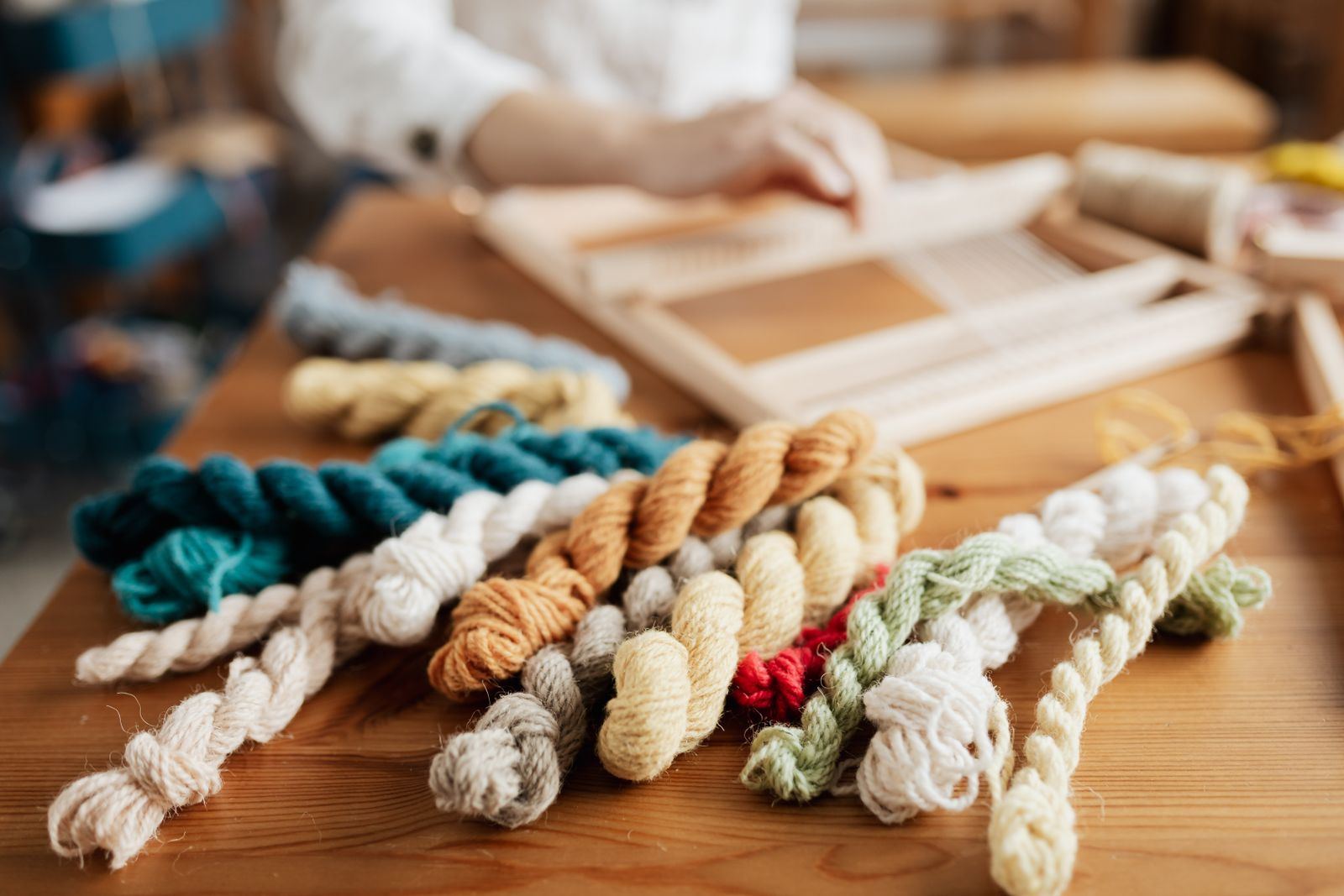
Sett is ends per inch; WPI is wraps per inch. To pick a weaving yarn, wrap it around a ruler to find its WPI, then divide by 2 for the starting sett of balanced plain weave. The second rule: warp must be strong and smooth, so reserve fuzzy or loosely spun yarns for weft.
Those two numbers are the whole system. A beginner who learns to measure WPI and apply the half-sett rule can evaluate any yarn for any project without memorizing tables or asking in forums. The warp is under sustained tension, rubbed by heddle eyes hundreds of times per project, so it requires strength and tight twist. The weft is not under that stress. Most yarn works as weft; far fewer work as warp, and knowing the difference before buying saves the cost of a broken warp.
How does sett relate to the reed and ends per inch?
Sett is the number of warp threads per inch across the weaving width. The reed inside the beater determines sett: each thread is drawn through one dent (gap) in the reed, and the number of threads per inch is controlled by how many threads share each dent.
A 10-dent reed sleyed 1 thread per dent = 10 EPI. The same 10-dent reed sleyed 2 threads per dent = 20 EPI. Sleying alternately 1 and 2 threads per dent = 15 EPI. Different reed setts (8-dent, 10-dent, 12-dent, 15-dent) allow different base intervals; sleying determines the final count.
Sett affects cloth density and drape. A loose sett (few threads per inch) produces open, drapey cloth suitable for scarves and shawls. A firm sett (more threads per inch) produces dense cloth for towels, bags, and structured garments. The same yarn can produce radically different cloth at different setts. Weaving samples before starting a project is standard practice for anyone who has not used a yarn-at-sett combination before.
The draft (the written pattern for a weave structure) specifies the sett to use for that structure in a given yarn weight. Drafts in publications by the Handweavers Guild of America typically list a recommended sett alongside the yarn specification. That recommended sett is a starting point, not a law; adjust after sampling.
How do you measure WPI (wraps per inch)?
To measure WPI, hold a ruler and wrap the yarn around it snugly, keeping wraps side by side without gaps or overlapping. Count the wraps in exactly 1 inch. That count is WPI. Weavers use it to measure a yarn without relying on manufacturer labels (which use different systems: weight categories, Nm, Ne, Tex) and to translate that measurement directly into sett.
Different fibers wrap differently. Cotton is dense and wraps closely. Wool at the same apparent diameter may wrap slightly differently because it compresses under the ruler. Measure three or four times and average. A 5-percent variation across measurements is normal.
A plain ruler works, but a purpose-made WPI gauge holds the wraps in a fixed groove so the count doesn’t shift while you’re reading it, which matters most on slippery fibers like Tencel or silk.
As an Amazon Associate, Wool Hall earns from qualifying purchases, at no extra cost to you.
Merino wool samples in different textures. Fine wool (smooth, tightly twisted) measures a higher WPI and suits higher-sett weaving. Coarser, bulkier wool measures lower WPI. The same WPI-to-sett calculation applies to any fiber type. Photo: Cgoodwin via Wikimedia Commons. CC BY 3.0.
What sett does each yarn weight need?
The half-sett rule (WPI ÷ 2) gives the starting sett for balanced plain weave. Twills need slightly more density; tapestry needs far less. As explicit formulas: twill runs about WPI × 2/3, and weft-faced structures like tapestry run WPI ÷ 3 or less, opening the warp enough for the weft to pack in and hide it completely. The table below converts WPI to a starting sett by yarn weight, using those same three formulas.
| Yarn WPI | Approximate Category | Plain Weave Sett | Twill Sett | Weft-Faced Sett |
|---|---|---|---|---|
| 30 to 40 | Fine (laceweight/fingering) | 15 to 20 EPI | 20 to 26 EPI | 10 to 13 EPI |
| 20 to 28 | Sport / light DK | 10 to 14 EPI | 13 to 18 EPI | 7 to 9 EPI |
| 12 to 18 | DK / worsted | 6 to 9 EPI | 8 to 12 EPI | 4 to 6 EPI |
| 8 to 11 | Bulky | 4 to 5 EPI | 5 to 7 EPI | 2 to 3 EPI |
The sett ranges in this table are starting points for sampling. The right sett for any specific project depends on fiber, twist, intended drape, and weave structure. Weavers with experience often depart from the half-sett rule knowingly; beginners use it as a first warp and then sample from there.
8/2 cotton is the most common beginner yarn and measures WPI 22 to 28 depending on manufacturer. The numbers in “8/2” are a sizing code, not a style name: the first number is the cotton count (a diameter measure where lower means thicker), and the second is the ply count, so 8/2 means a size-8 single plied with two strands together. Once that code clicks, 3/2, 5/2, and 10/2 all read the same way: same system, different thickness. Half-sett falls at 11 to 14 EPI. In practice, 8/2 cotton is most often set at 10 EPI for kitchen towels (slightly open, weft packs in fully), 12 EPI for a balanced cloth, or 15 EPI for a firm cloth. At those setts it works on a 10-dent or 12-dent rigid heddle and the reed of most floor looms.
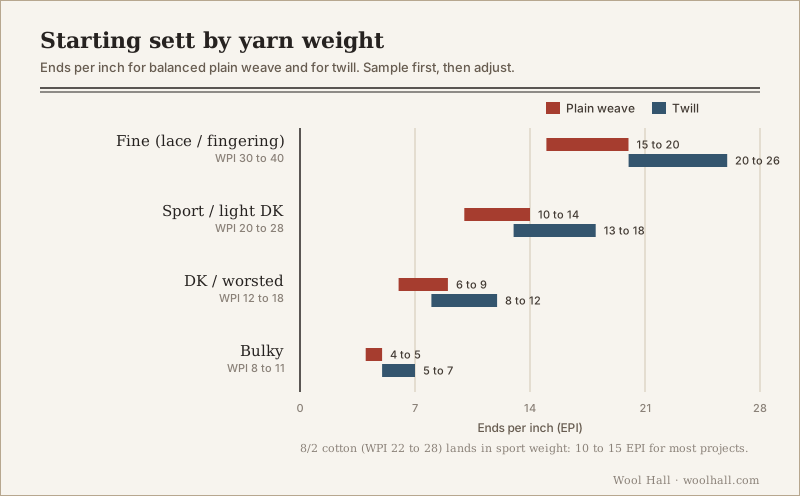
Starting sett by yarn weight, from this guide’s WPI-to-sett table. Finer yarn carries more ends per inch, and twill sits a little closer than plain weave at every weight. The numbers are sampling starting points, not fixed rules. Wool Hall original diagram.
What makes a yarn warp-worthy, and how do you test for it?
Warp threads are under sustained tension for the entire project. They slide back and forth through heddle eyes every time a shaft moves (on a floor loom, that is once per pick; on a rigid heddle, similar). At 200 picks per inch on a 4-foot project, a warp thread passes through the heddle eye 9,600 times. It must not break, pill, mat, or catch.
Requirements for warp yarn:
- Tensile strength. Tug the yarn sharply with both hands. It should not break or stretch significantly. If it breaks, it is not warp-worthy.
- Tight twist. Plied yarns resist abrasion better than singles. The ply twist should be firm, not loose. A loosely plied yarn will untwist and catch in heddle eyes.
- Smooth surface. The yarn must slide cleanly through heddle eyes without shedding fibers or catching on adjacent threads. Fuzzy, hairy, or textured yarns are weft-only.
- Consistent diameter. Thick-thin yarns (art yarns, handspun in many styles) create uneven tension across the warp. Warp tension must be consistent end to end; diameter variation makes this difficult.
Raw unspun wool fiber. Unspun fiber has no tensile strength and is not suitable for warp under any circumstances. Once spun into a tightly twisted, smooth yarn, wool becomes warp-worthy depending on the spin. The spinning matters more than the fiber species. Photo: Taras Zaluzhnyi via Unsplash. Unsplash License.
Which fibers work for warp, and which are weft-only?
Cotton, linen, Tencel, worsted-spun wool, and silk are reliably warp-worthy; mohair, angora, novelty yarns, and most handspun are weft-only. The spin matters more than the species, as the fiber notes below make clear.
Cotton. The standard warp fiber for beginners and production weavers alike. Strong, smooth, inexpensive. Available in sizes from 3/2 (heavier, best for towels at 8 to 10 EPI) to 10/2 (finer, best for lightweight fabric at 20 to 24 EPI). 8/2 is the most versatile size. Does not felt. Machine washable. Most rigid heddle weavers learn on 8/2 or 5/2 cotton.
Linen. Very strong, low elasticity (which actually helps keep loom tension consistent), produces cloth with excellent durability and a characteristic cool hand. Used for dish towels, table linens, bags. Shrinks significantly in the first wash (wet-finishing changes the hand dramatically and is a required step). Higher WPI than equivalent cotton by weight. Slightly abrasive on heddle eyes but not damagingly so.
Tencel (lyocell). Smooth, lustrous, comfortable against skin. Excellent warp material; the smoothness reduces heddle friction. Drapes beautifully; popular for scarves and garments. More expensive than cotton. Available from Gist Yarn, The Woolery, and other specialty suppliers.
Wool (worsted-spun). Worsted-spun wool (drafted along the fiber length, tightly spun, smooth) is warp-worthy. It tolerates loom tension well and its natural elasticity helps maintain even tension across the warp. Woolen-spun wool (the fuzzy, lofty type used in handspun and many craft yarns) is not warp-worthy; it mats in heddle eyes. The distinction matters more than the fiber species. Most commercially produced “weaving wool” is worsted-spun and labeled as warp-suitable.
Silk. Exceptionally strong relative to diameter. Very smooth. Expensive. Warp-worthy in all standard spun forms. Used for fine yardage and luxury scarves.
Mohair / angora. Weft-only. The long halo fibers catch on heddle eyes, adjacent threads, and the reed. Using mohair as warp creates a progressively tangled mess that is difficult to undo.
Handspun. Depends entirely on the spin. A tightly plied, consistent handspun yarn may be warp-worthy. A loosely spun single, or anything with significant thick-thin variation, is not. Most handspun is most productively used as weft, showcased against a commercial cotton or linen warp.
Novelty / art yarns. Weft-only. Slubs, loops, beads, foil, and irregular diameters will not pass through heddle eyes or will catch on adjacent threads. Use them for weft placed at intervals against a plain warp.
Knitting yarn. Usable, but almost always as weft rather than warp. Yarn spun for knitting is typically spun loosely for softness and drape, exactly the qualities that make it pill, break, or shed fiber under warp tension and heddle-eye abrasion. As weft it’s a different story: a soft, springy knitting yarn works fine there, since weft never sees sustained tension or the same repeated friction. Rigid heddle weavers use this on purpose, running a sturdy cotton or linen warp with a soft knitting yarn weft for a mixed-texture cloth a single fiber couldn’t produce alone.
Which warp yarns should you buy first?
Start with 8/2 cotton, the workhorse for most beginners; add 3/2, 5/2, or 10/2 cotton, or Tencel, as your projects call for heavier, lighter, or higher-sheen cloth. Each is sized on the same cotton-count logic, so the WPI and sett shift predictably with the number.
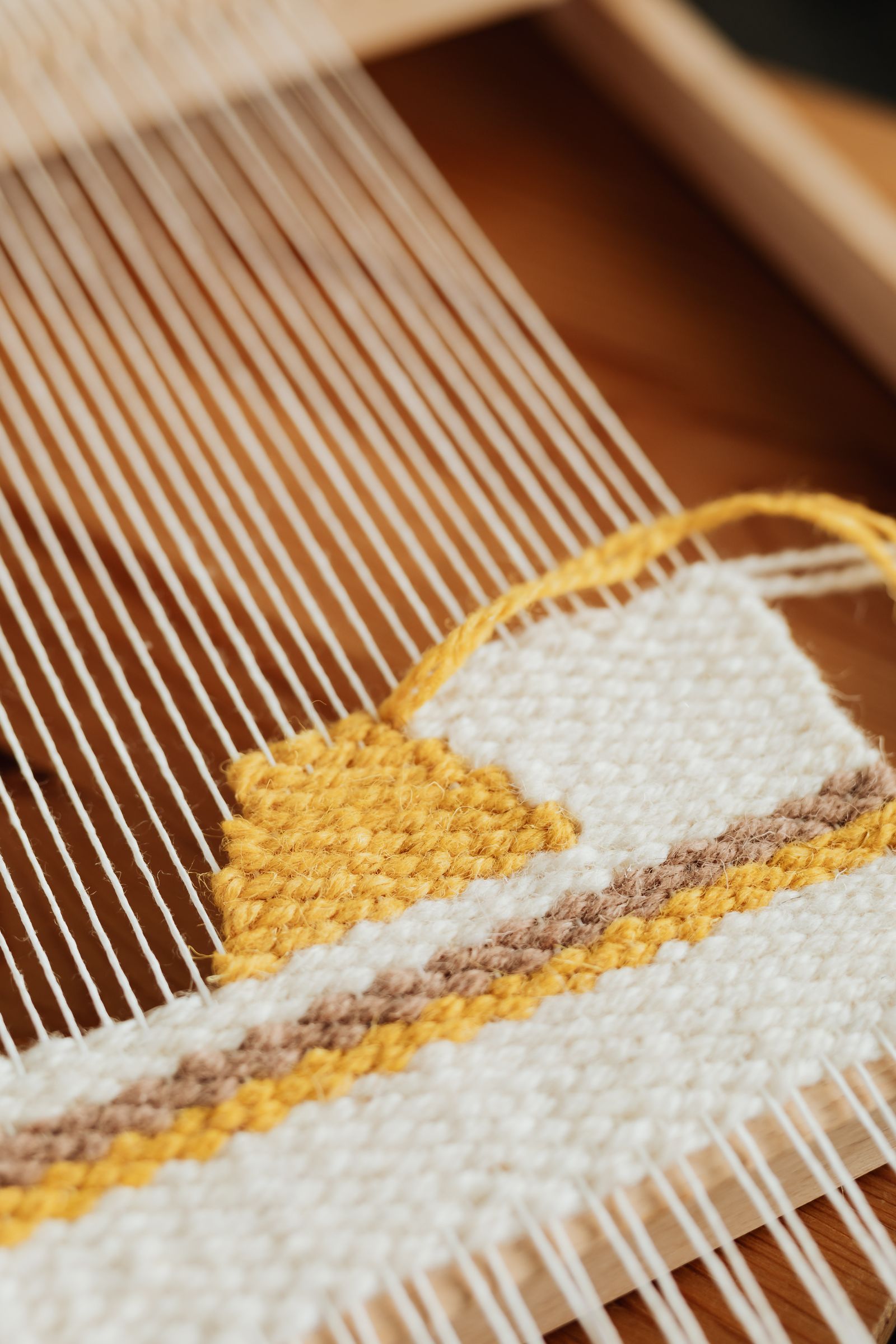
Warp threads under tension with the first rows of weft interlacing, the result of setting up a smooth, even warp. At 12 EPI across a 15-inch weaving width, this warp has 180 threads; at 10 EPI it has 150. The round, smooth surface of 8/2 cotton threads cleanly through heddle eyes without snagging. Photo: Karola G (kaboompics.com) via Pexels. Pexels License.
8/2 cotton is the right starting point for most beginners. One 800-yard cone (the standard unit) costs $10 to $20. For a 15-inch-wide, 6-yard warp at 12 EPI, you need 180 threads × 7 yards (including loom waste) = 1,260 yards. Two cones gives comfortable margin. 8/2 cotton comes in solid colors and naturals; most suppliers stock it in dozens of colors.
3/2 cotton is heavier (WPI ~12 to 14, sett 8 to 10 EPI) and produces firmer, thicker cloth. Best for kitchen towels, mug rugs, placemats. Heavier to warp but weaves faster.
5/2 cotton sits between 3/2 and 8/2. WPI ~18 to 22, sett 10 to 12 EPI. Good for table runners and medium-weight cloth.
10/2 cotton is finer. WPI ~30 to 36, sett 15 to 20 EPI. Used for fine cloth, lightweight garment fabric, and high-resolution pattern weaving. Threading 200-plus threads across a 15-inch warp is slow; beginners usually work up to 10/2 after several projects.
Tencel 8/2 or 5/2: same sizing logic as cotton. Smoother hand, higher sheen. A strong choice for rigid heddle and floor loom scarves.
Where can you buy weaving yarn?
Specialty suppliers Gist Yarn and The Woolery carry the widest weaving-specific selection with published sett guides; Amazon stocks a narrower range of 8/2 cotton with faster shipping.
Gist Yarn (gistyarn.com) focuses specifically on weaving cotton and cotton-linen blends. Their “Beam” collection is 8/2 unmercerized cotton designed for rigid heddle and floor loom. They publish sett guides for each yarn and sell sample packs that let you try colors before committing to full cones. Pricing is slightly above commodity cotton but the color range and yarn quality are well-regarded by rigid heddle weavers.
The Woolery (woolery.com) carries a broader selection: 8/2 and 3/2 cotton in dozens of colors, 5/2 cotton, Tencel, linen, and wool weaving yarns. Also stocks reeds, lease sticks, raddles, and other supplies. Their website includes sett recommendations on most yarn listings.
Amazon carries some weaving yarn, mainly 8/2 cotton from a few brands sold in cone form. Quality varies by supplier; look for tightly plied yarn from established brands and check the WPI against the manufacturer’s spec. The advantage is Prime shipping and easy returns; the disadvantage is narrower color range and less weaving-specific curation than specialty suppliers. Search “8/2 cotton weaving yarn” to see current offerings.
How much yarn do you need to buy?
Multiply EPI by weaving width to get the thread count, then multiply by the warp length plus loom waste for total warp yardage. Budget roughly the same again for weft in balanced plain weave, or 3 to 4 times for weft-heavy structures.
Warp yardage:
(EPI × weaving width in inches) × (warp length in yards + loom waste in yards)Loom waste: 24 to 36 inches on a floor loom (the warp tied to both apron rods that cannot be woven), 12 to 18 inches on a rigid heddle. Add 10 to 15 percent for any measurement errors.
Example: 12 EPI × 15-inch weaving width × (4-yard project + 1-yard loom waste) = 180 threads × 5 yards = 900 yards warp.
Weft yardage:
For balanced plain weave, weft yardage roughly equals warp yardage. For a 900-yard warp, budget 900 yards of weft (which may be a different yarn or a different color of the same yarn).
For weft-heavy structures (rep weave, tapestry): budget 3 to 4× the warp yardage.
Most 8/2 cotton cones are 800 to 1,000 yards. Two warp cones plus two weft cones comfortably covers most beginner projects. Buy more than you think you need; unused cones keep indefinitely, and running out mid-project means matching a dye lot.
Using this with the warping guide
The sett decision happens before warping begins. Once you know EPI and weaving width, you can calculate the total warp thread count, buy the right amount of yarn, and sley the appropriate reed. The warping process, whether back-to-front or front-to-back, is the same regardless of sett. The choice of sett determines what reed you reach for and how many threads you count out on the warping board.
On a Schacht Cricket 15-inch rigid heddle, you are working with a fixed reed sett (the heddle itself); the rigid heddle version of “sett” is the dent spacing of the heddle, typically 7.5 or 10 dents per inch depending on which heddle is installed. That means the rigid heddle sett decision is made when you buy or swap the heddle, not when you sit down to warp. Knowing the heddle’s EPI, you can work backward to which yarn weights are appropriate.