Yarn Swift and Ball Winder: The Complete Pairing Guide
A swift holds the hank open; the winder cranks it into a cake. Neither does much alone. Winder types, and the best budget and premium pairs, verified July 2026.
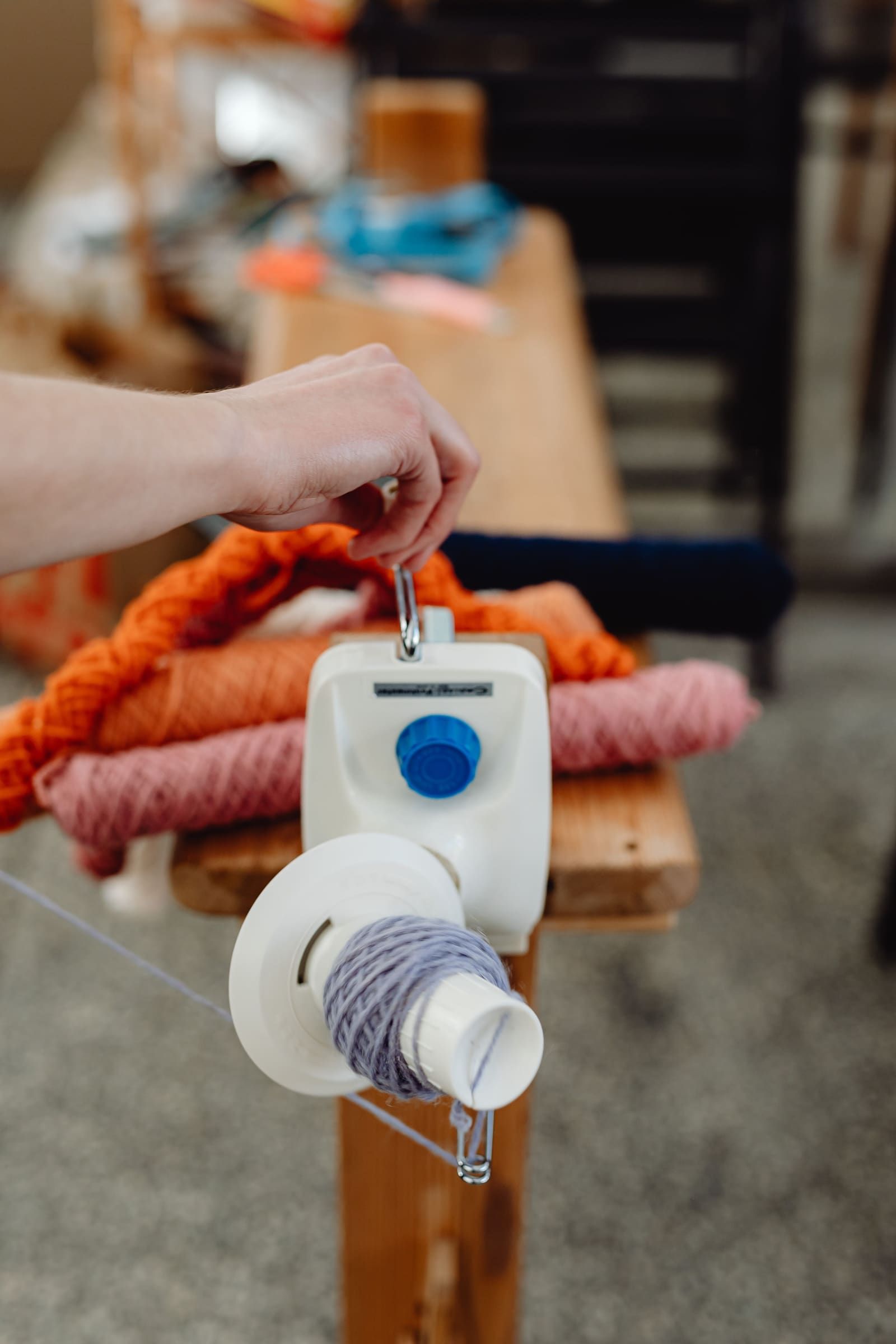
A yarn swift and a ball winder are a pair, not a choice. The swift holds a hank open and lets it rotate; the winder pulls yarn off the swift and cranks it into a center-pull cake. Buy only a winder and there’s nothing steady to pull from. Buy only a swift and you still have a hank, just a tidier one. Most people who wind more than the occasional skein end up owning both within a season.
Why do you need both a swift and a ball winder?
Because each tool solves half the problem, and the other half doesn’t go away on its own. A hank of yarn arrives as a large loop, twisted on itself for shipping. Untwisted and laid flat, it’s a single continuous loop with no obvious start point and every reason to tangle the second you touch it.
The swift’s job is to hold that loop under light, even tension so it can rotate freely as yarn comes off. Nothing about the swift moves the yarn anywhere. It just keeps the hank from collapsing into a snarl while something else does the pulling.
The winder’s job is to be that something else. It grips the free end, and each crank of the handle draws yarn off the swift and wraps it around a spindle, building outward into a stable, self-supporting cake that later pulls smoothly from the center. Cranking a winder against a bare hank on a chair back or draped over someone’s arms works for one skein, badly, and creates the exact tangle the swift exists to prevent.
So do you need both, or does one do the job alone? A swift alone still gets you an untangled hank. Plenty of people wind by hand off a swift for years and never buy a winder. But a winder without a swift is winding blind: you’re managing tension and unwinding by hand while also cranking, and a hank that shifts mid-wind snarls exactly the way it would with no swift at all. The pair earns its cost back the first time a full bag of hand-dyed skeins needs winding before a project can start.
How does a swift and ball winder work together?
Set side by side on the same table, close enough that the yarn path between them stays roughly level. The swift’s arms expand to the hank’s circumference and hold it under light tension. The winder clamps to the table on the other side, its spindle aimed back toward the swift.
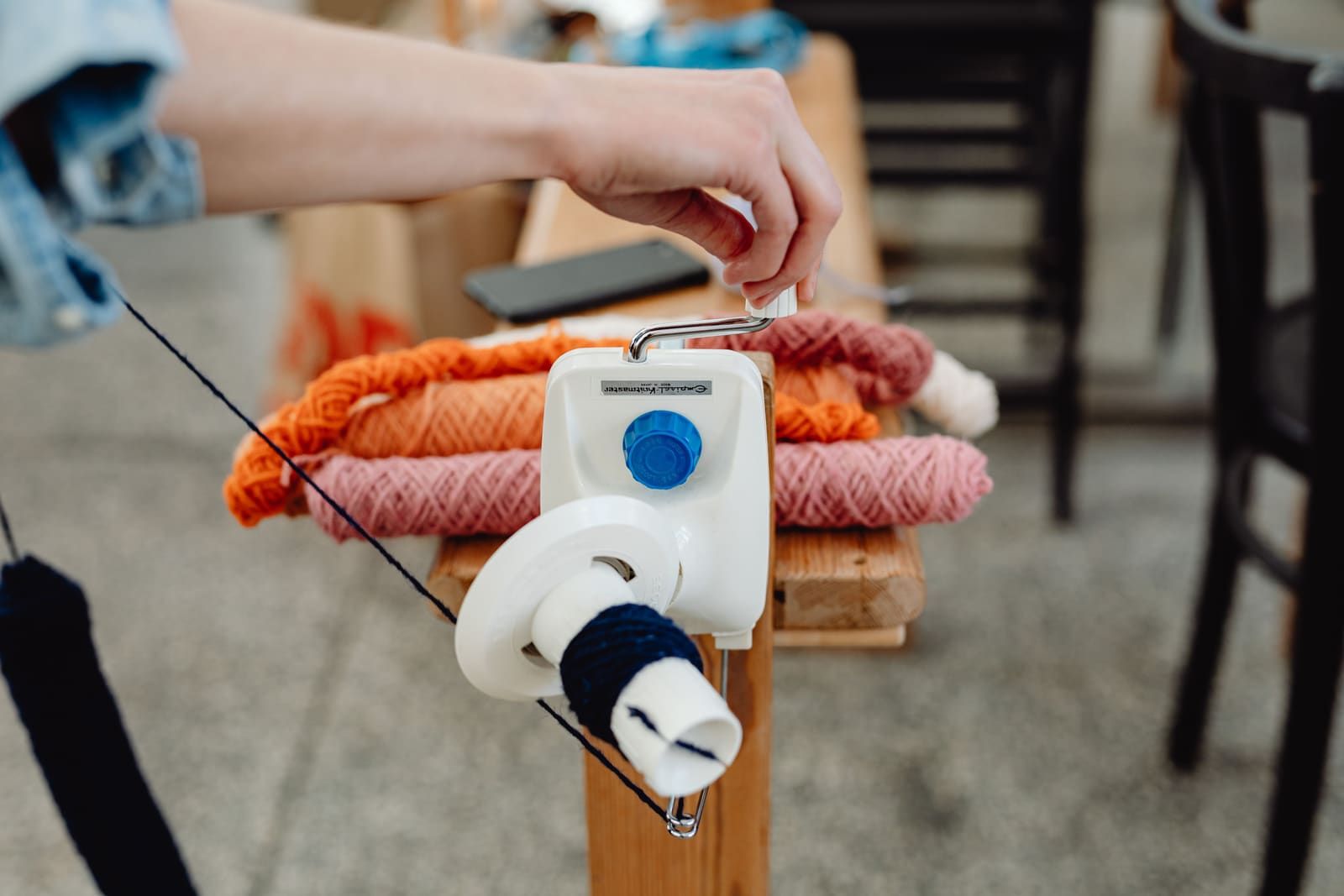
Thread the yarn’s free end onto the winder’s spindle, then crank. Each turn pulls a length of yarn off the swift, which spins in place to feed it, and wraps that length onto the winder’s growing cake. The two motions run in the same rhythm: crank the winder, the swift turns to match, yarn pays off clean. A full skein, 400 to 800 yards for most commercial hanks, takes roughly a minute and a half at a steady crank.
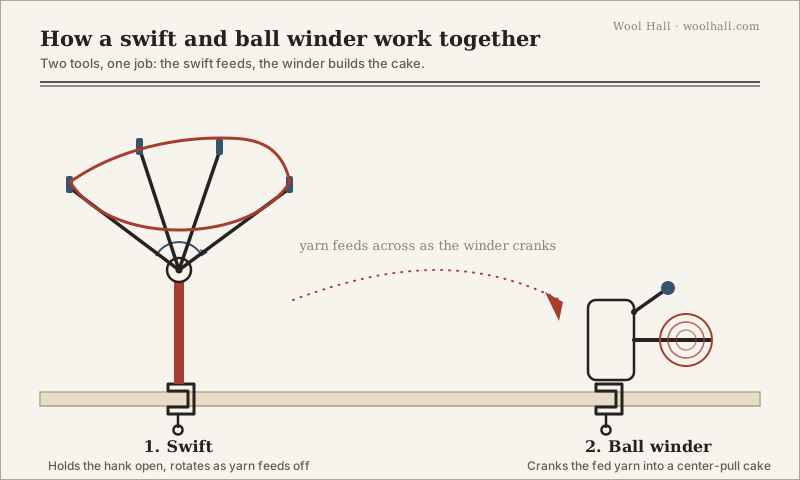
The two halves of the system: the swift feeds, the winder builds. Cranking one turns the other. Neither tool does the other’s job. Wool Hall original diagram.
Umbrella swift or table clamp swift, which one pairs best?
For this pairing, the umbrella swift is the default, and almost every winder buyer already owns one or is buying one at the same time. Its spoked, expanding-arm design adjusts to hank sizes from laceweight to bulky handspun and clamps to the same table edge the winder uses, which keeps the whole setup within arm’s reach.
Paddle swifts and the fixed-post “lazy kate” style skein holders exist too, mostly for spinners managing bobbins rather than commercial hanks, and they’re a narrower use case than most winder buyers need. If you haven’t bought a swift yet, don’t reinvent that research here. Wood versus plastic, table clamp versus wall mount, and the specific models worth buying at each price point are covered in full in the umbrella swift guide. Read that one for the swift decision and come back here for the winder half.
Hand-crank or electric: what’s the difference in ball winders?
Hand-crank is the standard, and it’s the right choice for nearly everyone. A hand-crank winder is mechanically simple, a spindle, a gear or two, and a crank arm, so there’s little to fail and even the plastic entry models last for years of normal use. The tradeoff is that winding is a hands-occupied task: one hand cranks, the other manages tension, and a large project (a whole sweater’s worth of skeins) means standing there for the duration.
Electric winders remove the cranking. A motor turns the spindle at a set speed while you feed and guide the yarn, which matters if you’re winding in volume, dyeing for sale, or running a fiber studio where staff time is the real cost. The catch is price and selection. The vetted electric option from a name brand is the Ashford E-Ball Winder at $649, roughly eight times a mid-range hand-crank winder. Below that, Amazon carries a churn of unbranded electric winders in the $30 to $70 range under names that rotate seller to seller; they can work fine, but with no established brand behind them, quality and support are a gamble in a way a hand-crank winder from Ashford or Nancy’s Knit Knacks isn’t. For most home knitters and weavers, hand-crank is not a compromise, it’s the tool that fits the actual volume of yarn coming through the house.
Can you use a ball winder without a swift?
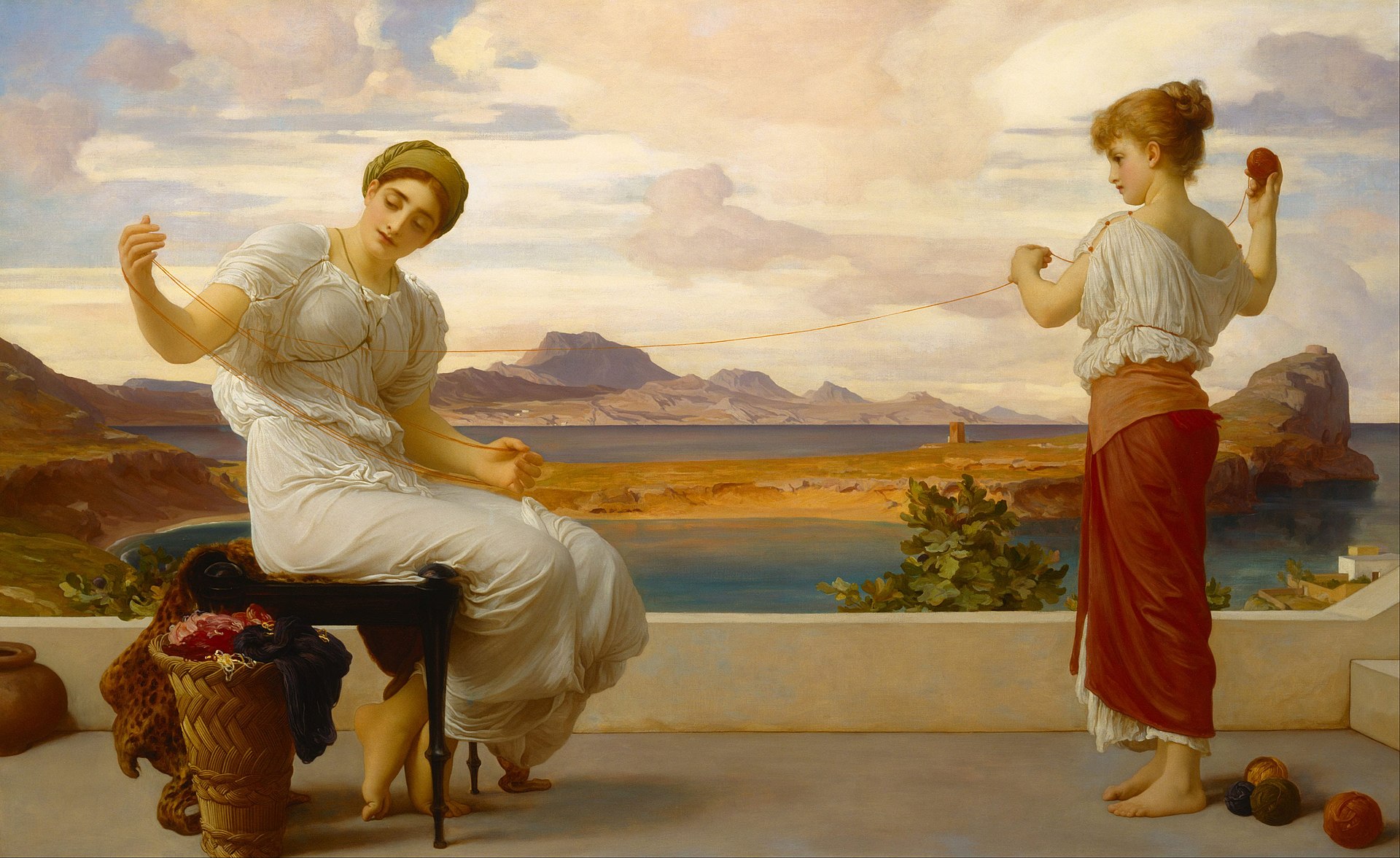
Yes, but only by replacing the swift with a person. Before umbrella swifts were common furniture, winding a skein meant draping the hank over someone’s outstretched forearms, or your own knees, while the other person (or your free hand) fed and wound. It’s exactly the two-figure arrangement in Frederic Leighton’s 1878 painting below: one woman holds the hank taut across her hands while the other winds it off. The method works. It’s also why, before the swift existed as a standalone tool, winding yarn was rarely a one-person job.
A winder still needs a stable, evenly-tensioned source to pull from, whether that source is a spoked swift or a set of arms. If you only have one skein to wind and no swift on hand, looping it over a chair back or a helpful pair of hands and cranking carefully will get you a usable cake. It just won’t be repeatable, and it won’t hold up to more than a skein or two before the arrangement gets tiresome for whoever’s arms are doing the holding.
What ball winder capacity do you actually need?
Match the winder’s stated capacity to the largest single hank you buy regularly, not your biggest project. A sweater’s worth of yarn arrives as several separate skeins, wound one at a time, so the winder never has to hold an entire project’s yardage at once. Most commercial skeins run 100 to 200 grams; hand-dyed hanks from indie dyers often run smaller. A winder rated for 100 grams handles the overwhelming majority of what a knitter or weaver buys. Bulkier and bump-weight yarns, and anyone buying fleece-direct hanks from a spinning group, want the larger-capacity metal or wood winders below.
| Winder | Price | Capacity | Material | Crank |
|---|---|---|---|---|
| KnitPicks Yarn Ball Winder | $25.99 | 100g / 3.5oz | Plastic | Hand |
| Stanwood Needlecraft Large Metal | $82.45 | ~10oz / 280g | Steel frame, nylon cogwheels | Hand |
| Ashford Wooden Ball Winder | $289 | 500g / 17.5oz | Lacquered Beech | Hand |
| Nancy’s Knit Knacks Heavy Duty | $404.25 | 1lb+ | Maple hardwood, steel shafts, Swiss gears | Hand |
| Ashford E-Ball Winder | $649 | 500g / 17.5oz | Lacquered Beech | Electric |
Prices verified July 2026 direct from each maker or retailer.
The best budget pairing
KnitPicks plastic umbrella swift (about $25) plus the KnitPicks Yarn Ball Winder ($25.99). Same maker, same order, about $51 total before shipping. The swift handles standard commercial skeins without issue, and the winder’s 100-gram capacity covers most of what a beginner buys. Neither tool is built for daily heavy use, the plastic gears wear faster than metal or wood, but for someone winding a skein or two a month, that’s not the failure mode they’ll ever hit.
As an Amazon Associate, Wool Hall earns from qualifying purchases, at no extra cost to you.
The Stanwood Needlecraft metal winder above is the natural next step up before committing to a full wood pairing: $82.45, a steel frame instead of plastic, and roughly three times the capacity, while still shipping through Amazon with the same next-day convenience as the budget pick.
The best premium pairing
Schacht Yarn Swift ($80 to $100) plus the Ashford Wooden Ball Winder ($289). Total runs $370 to $390, and both tools are built to outlast their owner. The Schacht swift is hardwood with a smoother rotation than entry models and a wall-mount option for a dedicated studio. The Ashford winder is lacquered Beech, winds up to 500 grams (17.5 ounces), more than triple the KnitPicks capacity, and its all-wood gear train runs quieter than a metal winder under load.
This pairing is the right buy for anyone processing a lot of yarn: dyers winding stock for sale, weavers prepping bulk warp yarn, or spinners who’ve plied enough handspun that a plastic winder’s gears would be on borrowed time. Buy this pairing once and the only upgrade left is going electric.
For volume beyond even that, two options sit above the premium pairing. Nancy’s Knit Knacks Heavy Duty Ball Winder ($404.25) is maple hardwood over steel shafts with commercial-grade Swiss gears, rated to wind a full pound or more in one cake, built for a production studio rather than a home crafter. The Ashford E-Ball Winder ($649) is the same Beech-wood winder as the manual Ashford, with a motor replacing the crank, for anyone whose hands are the bottleneck rather than the tool.
Neither the Ashford winder nor Nancy’s Knit Knacks currently sell through Amazon, so those two links go direct to the maker’s retailer rather than through an affiliate link. Everything from the budget and step-up tier above ships through Amazon.
A swift and winder pair is the highest-return equipment purchase most fiber crafters make. It’s not the most expensive tool in the studio, and it doesn’t determine what a project looks like the way a loom or a spinning wheel does. It’s just the tool that turns raw hanks into something you can actually knit, weave, or crochet from without fighting the yarn first. Buy the swift, buy the winder, and the pile of skeins waiting by the door stops being a chore.