Hand Carders vs. Drum Carder: Do You Need to Upgrade?
Hand carders cost under $100 and suit small batches. A drum carder for wool runs $600 to $835 new, or $250 to $500 used, and about doubles processing speed.
A pair of hand carders costs $80 to $110 and is enough for most spinners who process a few ounces a week. A drum carder costs $600 to $835 new, or $250 to $500 used, and earns its price back in speed once you are processing raw fleece by the pound, blending your own colors at volume, or both. A blending board, at roughly $240, sits between the two: hand-powered like the carders, but built for layering color across a wide flat surface the way a drum carder’s batt does.
| Metric | Hand carders | Blending board | Drum carder |
|---|---|---|---|
| Street price, new | $80 to $110 | $220 to $240 | $600 to $835 |
| Used market | Rarely worth selling used | Occasional, modest discount | Strong; $250 to $500 typical |
| Time per ounce, roughly | 10 to 20 minutes | 10 to 15 minutes | 6 to 8 minutes |
| Batch size | Small rolags, a few grams each | Wider rolags, one layer at a time | Full batts, ounces at once |
| Best at | Testing blends, portability, raw fleece opening | Deliberate color layering, art batts | Volume, consistency, repeat blends |
| Learning curve | Low | Low to moderate | Low, but cleaning and feeding take practice |
What does a set of hand carders actually do?
Hand carders are two paddle-shaped boards, each covered in a stiff wire cloth called card cloth, worked back and forth against each other to open locks of fiber, remove some debris, and align the fibers enough to roll off as a rolag. A rolag is a loose cylinder of fiber, usually just an ounce or two, spun from the end using a long-draw technique on a spinning wheel that keeps air trapped in the yarn. That trapped air is why hand-carded, woolen-spun yarn feels warm and light compared to combed, worsted-spun yarn from the same fleece.
Ashford’s Classic hand carders run $89 for the pair, in either a 72-dpi standard cloth for wool or a 108-dpi fine cloth for cotton and other short fibers. Louet’s version costs a bit more at $108 and uses tulip wood with curved backs, in 46 TPI or a 110 TPI extra-fine option. At the premium end, Clemes & Clemes builds hand carders to order in cherry, walnut, and other hardwoods, priced from $136 up to $283 for the curved-back 72 TPI pair; the tradeoff for the higher price is a lead time measured in weeks, since each pair is made after you order it, not pulled off a shelf.
What hand carders are genuinely good at: small test batches before committing a full fleece to one plan, blending two colors or fibers by layering them on the cards a pinch at a time, and going wherever you go. A pair fits in a bag. Nobody packs a drum carder for a weekend at a fiber festival.
What does a drum carder do that hand carders can’t?
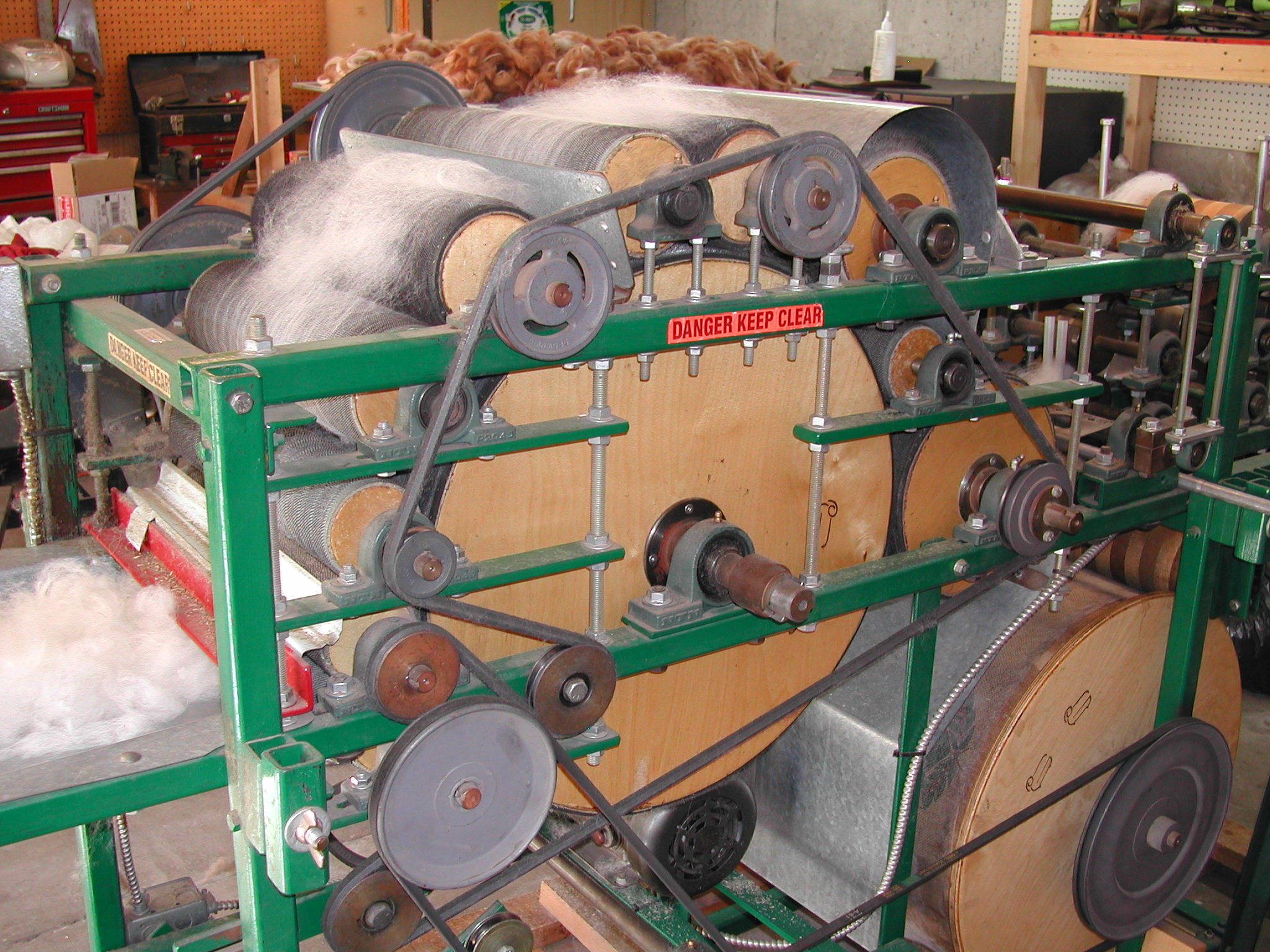
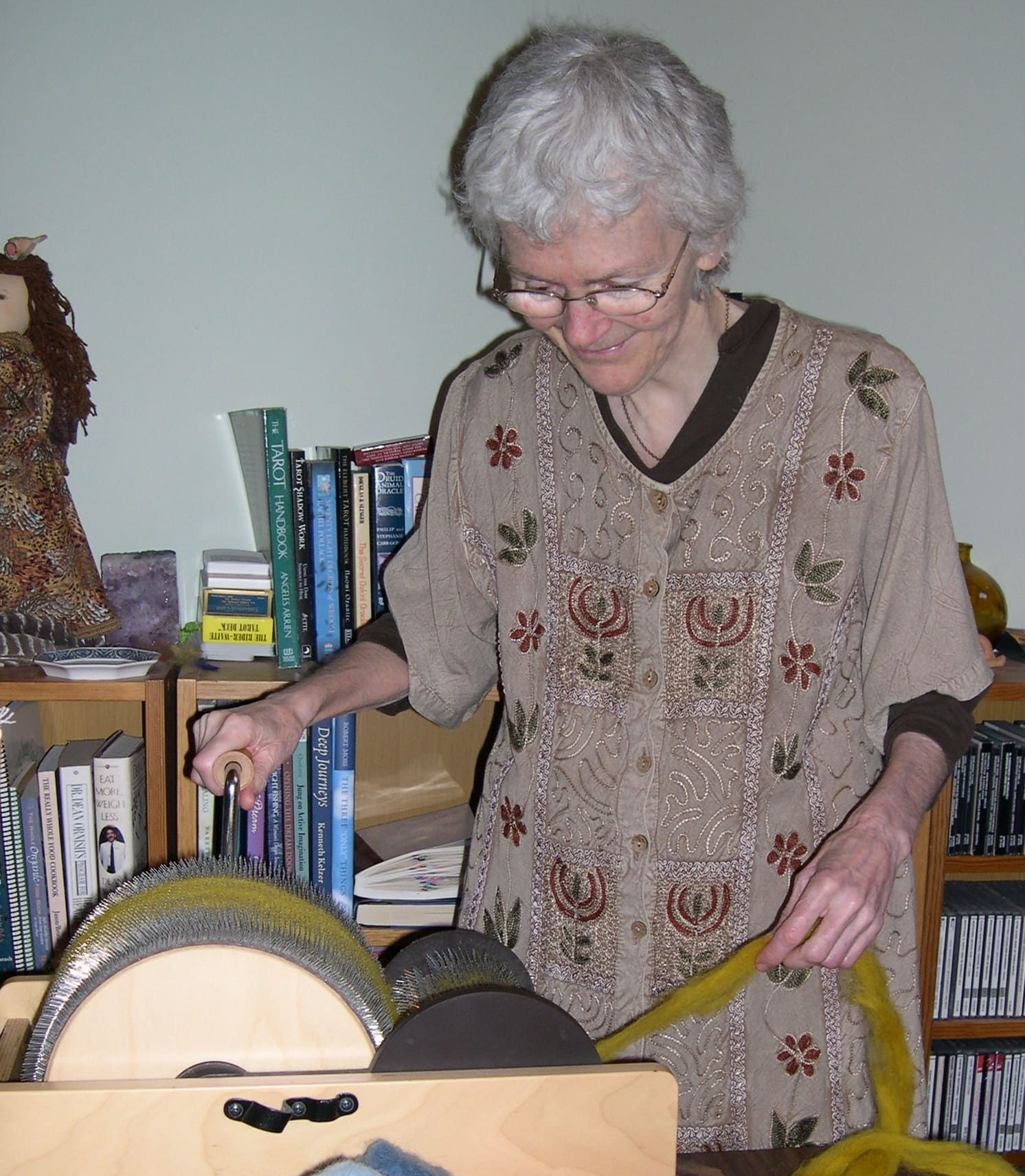
A drum carder replaces the back-and-forth of two paddles with two rotating cylinders. Turn a hand crank and a small licker-in drum pulls a thin layer of fiber off an infeed tray, then hands it to a larger main drum that builds a continuous, even batt rather than a series of separate rolags. Ashford’s Standard drum carder runs $835 in either 72-point cloth for general wool or 120-point superfine cloth for cashmere and fine Merino, per Paradise Fibers pricing checked in July 2026. Ashford also sells a 12-inch wide model built for volume, and both the Standard and Wide come with two crank ratios, 4:1 or 6:1 depending on the model, so a spinner can trade speed for control depending on the fiber.
The batt itself is the real difference, not just the size of it. A rolag from hand cards is small and a little uneven by nature; a drum-carded batt is wide, flat, and consistent enough that a spinner working through a whole batt gets the same fiber character from the first inch to the last. That consistency matters more the larger the project gets. For sweater quantities, matching sock pairs, or anything where 8 ounces of yarn needs to look and feel the same throughout, a drum carder’s batts are doing something hand cards structurally can’t: producing that much uniform prep in one pass.
How much faster is a drum carder, really?
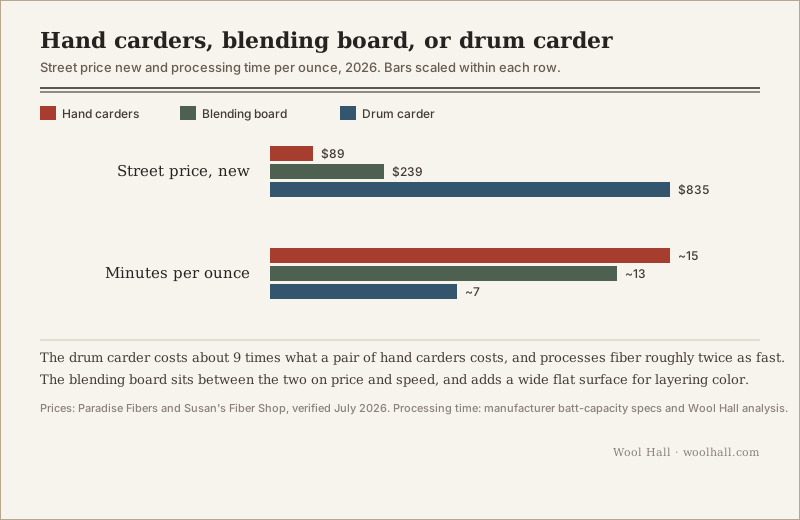
Hand carding runs roughly 10 to 20 minutes per ounce once you count loading the cards, working the fiber back and forth, and rolling off the rolag. A single-wide drum carder holds about 1.5 to 2.5 ounces per batt and fills in 12 to 20 minutes of steady cranking, which works out to something like 6 to 8 minutes per ounce, and a full pound runs close to two hours on a manual carder or closer to ninety minutes on a motorized one. So the honest answer is: a drum carder is about twice as fast per ounce, not ten times faster. The real time savings shows up at volume, when “twice as fast” compounds across a whole fleece instead of a single rolag.
One owner’s accounting, published on Woolmaven, put a mid-range drum carder at $621.35 including shipping and an optional set of brushes, against $57 to $89 for a pair of hand carders, roughly nine to eleven times the cost for that particular setup. That tracks with current retail: Ashford’s carder at $835 versus its own hand carders at $89 is a similar ratio. The math only works in the drum carder’s favor once the time saved is worth more than the price gap, which for most hobbyist spinners means processing fiber often enough that the hours actually add up.
Where does a blending board fit between the two?
A blending board looks like neither tool: it’s a flat panel, typically 12 inches square, covered edge to edge in fine carding cloth, with a rotating keel that tilts the surface for drafting fiber off. Ashford’s version runs $239 and includes a blending brush and two dowel rods for pulling the finished layer off as a rolag. Instead of transferring fiber back and forth between two paddles or feeding it through a rotating drum, you build up thin, deliberate layers directly on the board, color by color, fiber by fiber, then peel the whole thing off as one wide rolag or a series of them.
The board’s actual advantage over both hand cards and a drum carder is control over exactly where color goes. A drum carder blends fiber as it passes through the licker-in and main drum, which is efficient but somewhat random; a blending board lets you place a strip of one color next to a strip of another and see precisely how they’ll sit before you draft the rolag off. Spinners making gradient yarn or planned color-shift projects reach for a blending board specifically because hand cards blend too randomly for a controlled gradient and a drum carder blends too thoroughly for one. It costs roughly two and a half times what hand carders do and less than a third of a new drum carder, and it earns its keep on projects where color placement is the whole point, not on raw processing speed.
Do you actually need a drum carder, or are hand carders enough?
Most spinners never need to upgrade. If you buy commercial roving or top and spin from that, or if you process a few ounces of fiber a week from a favorite local fleece, hand carders handle that comfortably and cost a tenth of a drum carder. The upgrade earns its price under three specific conditions: you are processing more than a few ounces of raw fleece per week and the hand-carding time is eating into spinning time, you regularly blend the same combination of colors or fibers and want that blend to come out identical batt after batt, or you buy whole fleeces at fiber festivals and need to turn a full fleece into spinnable prep without it taking a month of evenings.
None of those conditions are about quality. A careful spinner working slowly on hand cards can produce a rolag that spins into yarn indistinguishable from a drum-carded batt. The upgrade is about time and consistency at volume, not about unlocking a better result than hand carders can reach. If you’re not sure which category you’re in, track how many ounces you actually process in a typical month before buying anything. Spinners consistently overestimate their own volume when they’re excited about a new tool.
How much does a drum carder cost?
New, a drum carder from Ashford, Louet, or Strauch runs $600 to $835 depending on brand and cloth grade, with fine or superfine cloth (108 to 120 point) usually costing more than the 72-point standard. That’s the range this site’s own drum carder guide covers brand by brand, including the gear-driven Louet S10 and S17 and the American-made Strauch Petite, Standard, and Jumbo. Motorized versions, which remove the hand-crank step entirely, cost more again and are worth it mainly for spinners processing large volumes of raw fleece on a regular schedule.
The number that surprises new buyers isn’t the sticker price, it’s how little of that price is optional. Unlike hand carders, where an $89 basic pair and a $283 handmade pair do functionally the same job, a drum carder’s price is mostly tied to cloth quality and drum width, both of which affect what the tool can actually do. A cheaper drum carder with coarse cloth won’t handle fine Merino well; paying for the right cloth grade for your fiber matters more on a drum carder than it does on hand cards, where technique compensates for a lot.
Is buying a used drum carder a good idea?
Usually, yes, and this is where the used-drum-carder market genuinely separates itself from the used-hand-carder market, which barely exists because hand carders are cheap enough new that reselling one rarely nets a meaningful discount. A drum carder has almost no wearing parts beyond the carding cloth itself and the drive mechanism, so a well-kept carder from a decade ago cards just as well as one bought last week. Ravelry’s Spinners’ Marketplace and eBay both carry a steady supply: manual drum carders on Ravelry typically list around $350 to $400 including shipping, and eBay’s broader listing pool spans roughly $20 for parts or damaged units up into the thousands for premium models sold with accessories, with a raw average across that whole range landing near $500 as of July 2026. Quality brands hold their value well enough that buying used and reselling later, if your needs change, is a realistic plan rather than a loss.
What to check before buying used: run a hand along the main drum’s cloth, feeling for bent or missing teeth (they feel like gaps in a comb), confirm the two drums are close but not touching when the seller demonstrates it, and check a band-drive machine’s belt for fraying. Worn cloth alone isn’t a dealbreaker; replacement cloth from Ashford or a specialty supplier typically runs $80 to $150, which still leaves a $250 used-body purchase well below new price. The full breakdown of what to inspect, by brand, is in the drum carder guide.
Hand carders, blending board, or drum carder: who should buy which?
Buy hand carders if:
- You process a few ounces of fiber a week or less
- You mostly spin commercial roving or top and card only occasionally
- You want a tool that travels, fits in a project bag, and costs under $110
- You’re new to spinning and want to learn fiber prep before investing more
Buy a blending board if:
- Color placement matters more than volume: gradients, planned color transitions, art yarn
- You already own hand carders and want more control over blending, not more speed
- $220 to $240 fits your budget better than $600-plus
Buy a drum carder if:
- You process more than a few ounces of raw fleece weekly, and hand carding has become the bottleneck
- You blend the same fiber or color combination repeatedly and want batt-to-batt consistency
- You buy whole fleeces at festivals or from local shepherds and need to process them in hours, not weeks
- You’ve checked the used market first; a well-kept secondhand carder at $250 to $500 does the same job as a new one at $600 to $835
Whichever tool you land on, storage becomes the next problem fast. A drum carder in particular produces batts faster than most spinners can spin them, especially on an entry-level wheel that hasn’t caught up to the prep pace yet, so a dedicated project bag or fiber storage container that keeps rolags and batts from compressing or tangling with each other is worth having before the first full carding session, not after. Once the fiber is spun, a yarn swift and ball winder handles the next bottleneck: turning finished skeins into center-pull balls faster than winding by hand.
For the full brand-by-brand breakdown of drum carders, including the used-market inspection checklist and teeth-per-inch guidance, see the drum carder guide. For how carding compares to combing and commercial top as a fiber-prep route overall, see the fiber prep guide.