Fiber Prep Guide: Carding vs Combing vs Commercial Top
Carding makes woolen-spun yarn; combing makes worsted-spun yarn; commercial top does the prep for you. When each method wins for your spinning project.
Three preparations cover almost all spinning. Carding makes lofty, soft woolen-spun yarn from short to medium fiber. Combing makes dense, smooth worsted-spun yarn from long staple. Commercial top is washed and combed at a mill, so beginners can spin it straight from the braid with no tools.
Fiber prep is the choice that happens before the wheel is threaded, and it sets whether the finished yarn is dense or airy, smooth or textured, lustrous or matte. The same raw fleece prepared three different ways produces three different yarns. Each route carries a different tool requirement, a different result, and a different use case.
When does commercial top win over preparing your own?
Commercial top wins whenever consistency and speed matter more than cost: learning to spin, a specific color, or a project that needs even fiber thickness. It is fiber that has already been washed, combed, and drawn into a continuous strand by a fiber mill. You buy it in ready-to-spin form, typically as a braid or ball, and spin directly from it without any equipment beyond a spinning wheel or drop spindle.
Most beginner spinning uses Merino top. It is consistent in diameter, forgiving to draft, available in every colorway imaginable, and produces smooth, even yarn. It is also the most expensive route per ounce compared to buying raw fleece and prepping your own.
When commercial top wins:
- You are learning to spin and want to focus on drafting, not prep
- You need a specific color that does not exist in raw fleece form
- You are spinning for a project with yardage requirements that need consistent fiber thickness
- You live in a city with no access to raw fleece
- You do not own or want to buy carding or combing equipment
Pre-drafting commercial top: Before spinning, most spinners gently pull the top apart lengthwise, not from end to end, but by gripping two sections 6 to 12 inches apart and easing them apart. This loosens the compacted commercial prep and makes drafting easier. Pre-drafted top drafts more smoothly under tension than dense commercial top used straight from the braid.
The top vs roving distinction: Top has all fibers aligned parallel (worsted prep). Roving has randomly arranged fibers (woolen prep). Most commercial “merino” sold as beginner fiber is technically top, though the terms are used loosely in the hobby market. The difference affects yarn character: top produces smoother, denser yarn; roving produces loftier, softer yarn.
What does hand carding do, and when should you use it?
Carding opens fiber, randomizes its direction, and produces a rolag or batt for lofty woolen-spun yarn; it is the flexible route for short to medium staple and color blending. Hand cards are two paddle-shaped tools covered with wire teeth (called cloth) set at a specific angle. You load fiber onto one card, transfer it back and forth between the two cards, and roll the finished preparation into a cylinder called a rolag. The rolag is spun from the end inward using a long-draw technique that allows air to remain trapped in the yarn.
Hand carding: fiber loaded on the lower card is transferred by the upper card in repeated strokes, opening and aligning fibers. When the card is charged, the spinner rolls the top layer off into a rolag, the woolen preparation for spinning. Carding randomizes fiber direction; combing would align it. Photo: Rosyshoes via Wikimedia Commons. CC BY-SA 3.0.
Carding does three things: it opens fiber locks, removes some vegetable matter and nepps (small fiber tangles), and randomizes fiber direction. The random arrangement is why carded fiber produces lofty, airy yarn: the multidirectional fibers trap air between them. A woolen-spun yarn from carded rolags will be noticeably warmer and softer than a worsted-spun yarn from the same fleece combed into top.
What carding requires:
- Hand cards ($30 to $80 for a pair from Ashford, Schacht, or Clemes & Clemes)
- Short-to-medium staple fiber (works best under 4 inches; see the fiber matching table below)
- 10 to 20 minutes per ounce of preparation (slower than commercial top, faster than combing)
What carding enables:
- Processing raw fleece bought at a fiber festival or from a shepherd
- Blending colors or fiber types (layer different colors on the cards)
- Producing woolen-spun yarn for warm, soft garments
- Working with shorter staple breeds that combs cannot handle
Blending is carding’s other superpower. Layer two colors of the same fiber on the cards, or two different fibers altogether: Merino with a little silk adds sheen, wool with alpaca adds softness and drape, different fleece colors carded together make a heathered yarn no single-color prep can produce. Combing can’t do this the same way. It aligns fiber parallel, so two fiber types run through a comb tend to separate out rather than blend, which is exactly why carding is the tool reached for whenever a project calls for mixing color or fiber.
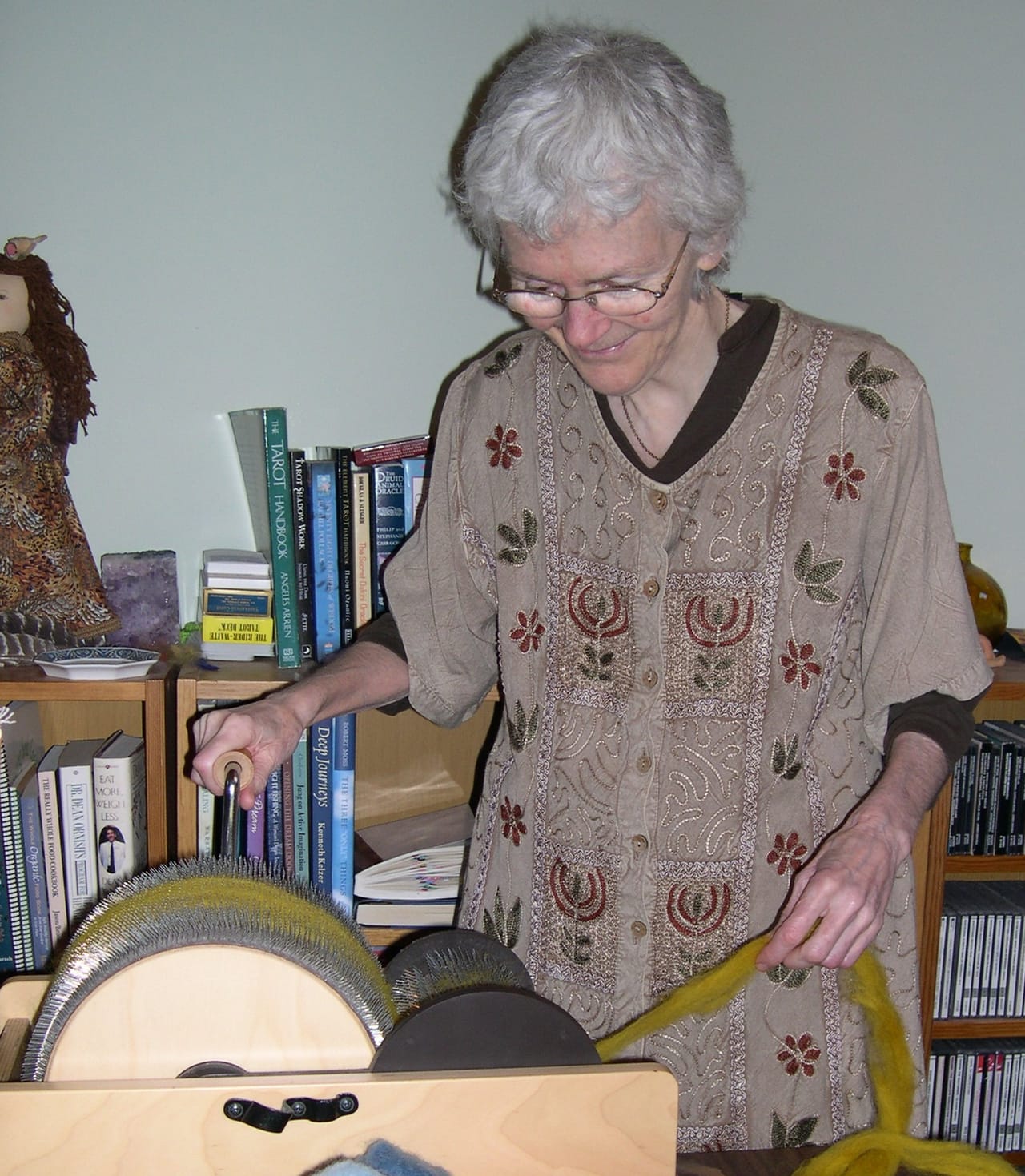
Drum carding is mechanically the same as hand carding but uses a rotating drum device that processes fiber faster and produces larger, more uniform batts instead of individual rolags. Drum carders run $150 to $500 and up, worth the jump once you’re processing a full fleece regularly or need production-scale batts rather than the occasional rolag. For a thorough comparison of hand cards vs drum carders, see the drum carder guide.
Carded batts from a drum carder: the fiber is open and lofty, with fibers running in multiple directions. A spinner pulls a strip from the batt and spins long draw. The trapped air in the multidirectional fiber produces woolen-spun yarn: warm, soft, airy. Photo: Karola G (kaboompics.com) via Pexels. Pexels License.
What does hand combing do, and who needs it?
Combing pulls out short noils and aligns long fibers parallel into a top for dense, smooth, lustrous worsted-spun yarn; it is the quality route for spinners working long-staple luxury fiber. Hand combs (also called Viking combs, wool combs, or fiber combs) are rigid tools with long, sharp steel tines set in a row. You lash fiber onto one comb, then transfer it onto a second comb by pulling the tines through the fiber repeatedly. Short fibers (called noils) fall out. Long fibers align parallel to each other. The result is drafted off the comb into a small top using a diz, a disc with a small hole that shapes the fiber into a narrow continuous strand.
Combed fiber spun worsted style (short draw, controlled, no air trapped) produces dense, smooth, lustrous yarn. The aligned fibers slide past each other easily, reducing the soft loftiness of carded yarn and increasing strength, durability, and water resistance. A combed-worsted sock yarn from the same fleece as a carded rolag yarn would be noticeably different in hand, weight, and function.
What combing requires:
- Hand combs ($50 to $150+ depending on tine count and row count)
- A diz for drafting off the comb
- Long staple fiber: combing works best at 3 inches or longer (shorter fibers fall out as noils and are wasted)
- More time than carding: 30 to 45 minutes per ounce
What combing produces:
- The finest worsted-spun preparation possible from a fleece
- Almost no vegetable matter or short fiber: highest quality output
- Lustrous, drapey yarn ideal for lace, weaving warp, socks, garments
Who needs combs: spinners working with long-staple luxury fiber (BFL, Romney, silk, Longwool breeds, mohair) who want the smoothest possible worsted yarn and are willing to invest time in meticulous preparation. Beginners rarely start with combs.
How does prep decide whether yarn is woolen or worsted?
The preparation sets the fiber arrangement, and that arrangement decides the rest. Carded, randomly arranged fiber spins woolen: lofty and warm. Combed, parallel fiber spins worsted: dense and smooth. The method maps directly to the spinning technique and the finished yarn character.
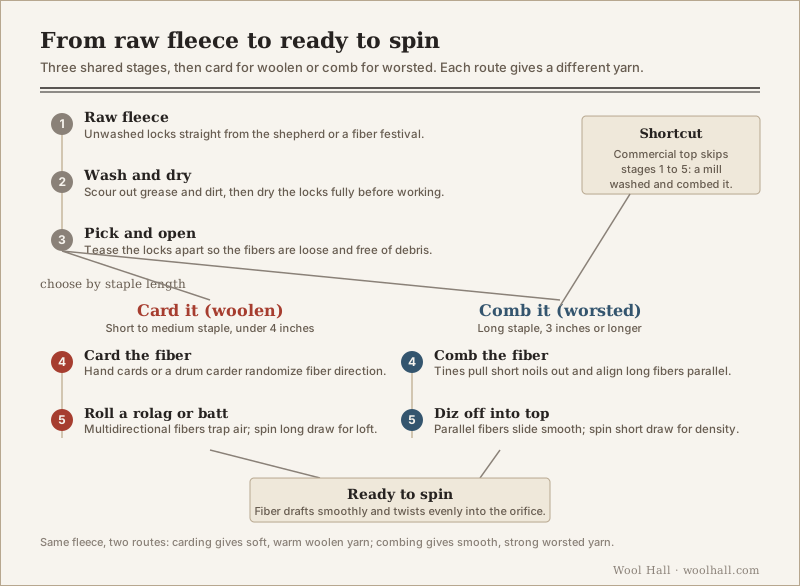
The same washed fleece splits into two routes at the prep stage: card it for a random, lofty woolen preparation, or comb it parallel for a smooth worsted top. Commercial top skips the home stages entirely because a mill already washed and combed it. Wool Hall original diagram.
| Prep method | Fiber direction | Spinning technique | Yarn character |
|---|---|---|---|
| Carded rolag / batt | Random / multidirectional | Long draw | Lofty, airy, soft, warm |
| Combed top | Parallel / aligned | Short draw | Dense, smooth, lustrous, strong |
| Commercial top | Parallel (combed at mill) | Short draw (or modified) | Smooth, consistent, controlled |
Woolen-spun yarn from carded fiber traps air and insulates well. It pills more easily. Worsted-spun yarn from combed fiber is durable and smooth. It is stronger per diameter. A sweater knit from woolen-spun yarn will feel warmer; a sock knit from worsted-spun yarn will last longer.
You can spin commercial top using a long-draw technique and produce a yarn with some woolen character, but the parallel fiber alignment limits how lofty it gets. Conversely, you can spin carded fiber short draw and get a moderately worsted result. The preparation is the biggest factor, but technique amplifies it.
Raw washed fleece before any preparation. From this starting point, the spinner chooses: card it into rolags for a woolen-spun result, comb it into top for a worsted-spun result, or bypass home prep entirely by buying commercial top. Each route takes different tools and produces a different yarn from the same fiber. Photo: Taras Zaluzhnyi via Unsplash. Unsplash License.
Which prep method matches which fiber?
Match by staple length: fiber under 3 inches is carded, fiber 3 inches or longer can be combed. The best prep method depends on the fiber’s staple length, the length of an individual fiber lock from tip to cut end.
| Staple length | Breed examples | Best prep method | Notes |
|---|---|---|---|
| Under 2” | Fine Merino, Cormo | Card only | Too short to align on combs; noils waste too much fiber |
| 2”–3” | Corriedale, Polwarth, Rambouillet | Card or commercial top | Can card or buy top; combing loses too much fiber |
| 3”–4” | Corriedale fleeces at longer end, Targhee | Either | Full flexibility; carding gives woolen, combing gives worsted |
| 4”–6” | BFL, Romney, Shetland, Cheviot | Comb preferred | Long staple aligns beautifully; carding works but wastes potential |
| 6”+ | Longwool breeds, Lincoln, Cotswold | Comb only | Cards cannot handle very long locks; combing mandatory |
| Silk, Tencel | N/A | Comb or buy top | Long staple; combing produces maximum luster |
Corriedale is the most flexible breed: its 3 to 4 inch staple suits both methods, making it the best breed for learning either technique. Most beginner hand-carding classes use Corriedale for this reason.
Merino is the most popular commercial top breed. Its short, fine staple makes it ideal for combed commercial prep; home combing loses too much to noils. Buy Merino as top, not raw fleece.
BFL (Bluefaced Leicester) has long staple and natural luster; it combs into a spectacular worsted prep. Carding is possible but wastes the fiber’s best quality.
Should you prep your own fiber or buy commercial top?
Buy commercial top when consistency and time win: classes, gauge-critical projects, and early learning. Prep your own when variety and cost win: a specific flock, color blending, or rare-breed yarn. The trade-offs line up cleanly.
| Factor | Buy commercial top | Card or comb your own |
|---|---|---|
| Cost per ounce | Higher ($0.50–$2.00/oz for Merino top) | Lower ($0.10–$0.40/oz for raw fleece) |
| Time cost | Zero prep time | 10–45 min per ounce |
| Equipment cost | None | $30–$150+ for cards or combs |
| Color control | Limited to what’s available | Full blending freedom on cards |
| Consistency | High, milled to spec | Varies with skill and fleece quality |
| Fiber access | Anything the vendor stocks | Whatever fleece you can source locally |
| Wool variety | Broad commercial range | Rare and heritage breeds possible from shepherds |
For spinning classes, production projects with tight yarn specs, or beginner learning: commercial top wins on consistency and time. For processing raw fleece from a specific flock, blending colors, or producing rare-breed yarn: home prep wins on variety and cost.
Many experienced spinners do both, choosing the method by project: commercial Merino top for a sweater that needs consistent gauge, hand-carded heritage breed for an experimental textured yarn, combed BFL top for a fine lace shawl.
Starting point recommendations
If you are new to spinning: start with commercial Merino top. Pre-draft it gently before spinning. Focus your learning on drafting and tension; add fiber prep later once the wheel or spindle is familiar.
If you want to process raw fleece: start with a pair of hand cards and a Corriedale fleece. Card 10 to 15 rolags, spin them, compare to commercial top. The difference in yarn character is immediately obvious. Prepped fiber piles up fast once you get going, so a dedicated project bag keeps rolags or combed top corralled and dust-free between carding sessions and time at the wheel.
As an Amazon Associate, Wool Hall earns from qualifying purchases, at no extra cost to you.
If you have been spinning for a year or more and want to go deeper: add hand combs. Try BFL or Romney. Compare the same fleece carded vs combed. This is where fiber prep becomes a genuine design tool rather than just a way to get fiber onto the wheel.
The spinning wheel anatomy guide and e-spinner vs treadle comparison cover the equipment side; this article covers the fiber side. Both sets of decisions shape the same finished yarn.