Ashford Traditional Review: Saxony Style, 17:1 Top Ratio
Saxony spinning wheel, single drive $829–$999 or double drive $879–$1,039, four ratios to 17:1, made in New Zealand since 1965. Prices verified June 2026.
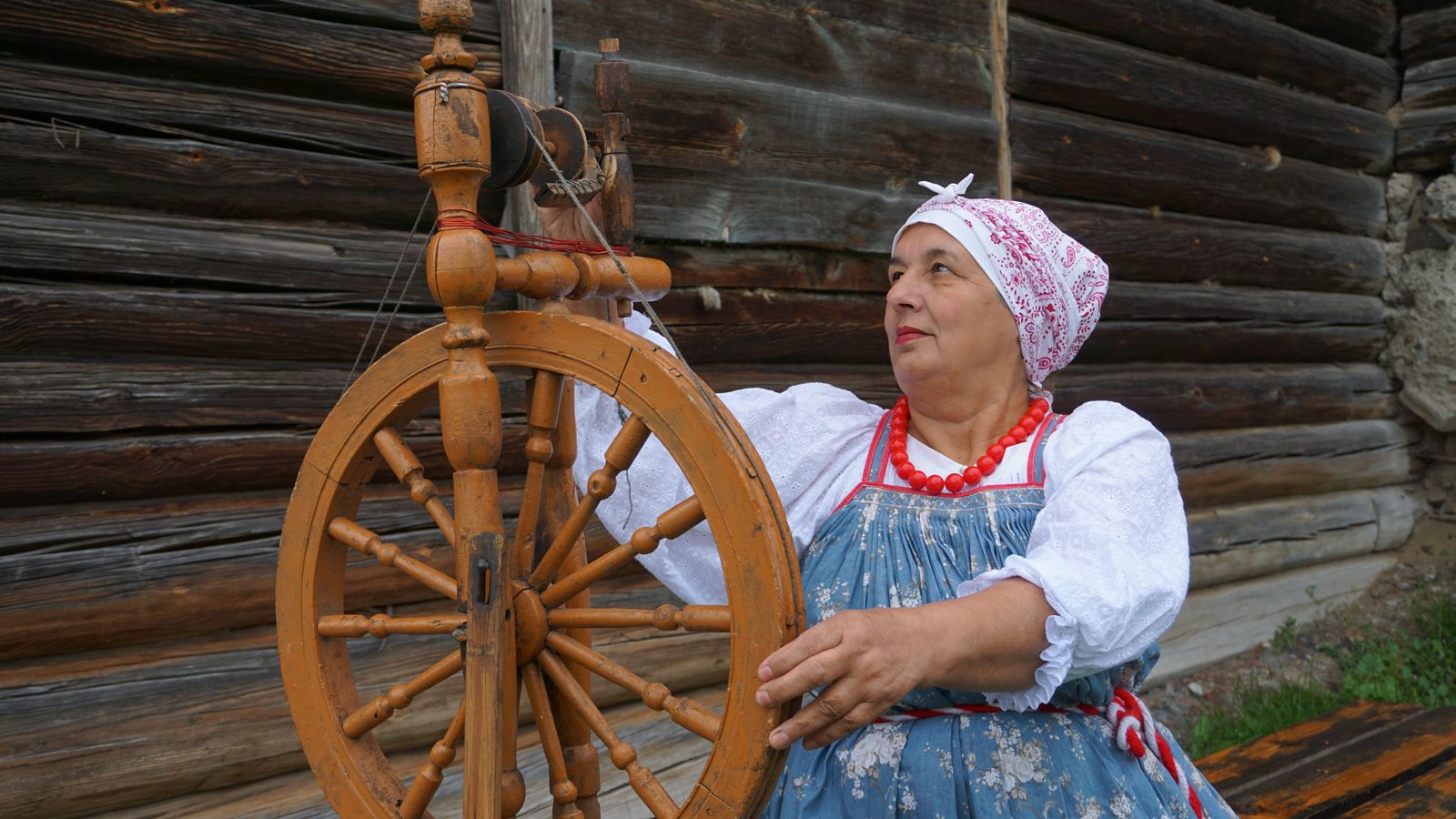
The Ashford Traditional is a Saxony-style spinning wheel made in Ashburton, New Zealand from Silver Beech. Single drive runs $829 unfinished or $999 lacquered; double drive adds $50 to each (verified June 2026). Unfinished ships as bare Silver Beech ready for the buyer to oil or lacquer; the lacquered option arrives with a clear factory finish already applied. The standard four-speed whorl covers ratios from 7:1 to 17:1 in single drive. Ashford has manufactured the Traditional continuously since 1965.
For most upgrade buyers coming from a castle-style wheel, the Traditional is the Ashford destination. For first-wheel buyers who have not yet decided what weight they spin, the Kiwi 3 is the better starting point.
What kind of spinning wheel is the Ashford Traditional?
The Traditional is a Saxony-style spinning wheel. In Saxony design, the flyer-bobbin assembly sits to one side of a large drive wheel, both arranged horizontally across a low, wide frame. The spinner sits beside the wheel and works the treadle below while drafting fiber from the orifice to the side.
This contrasts with a castle wheel (like the Kiwi 3, Joy, or Traveller), where the flyer assembly sits directly above the drive wheel on a vertical frame. Castle wheels are compact and often portable; Saxony wheels are wider, more traditional in appearance, and have a longer historical lineage in the spinning world. The Traditional is the only Saxony model in Ashford’s current lineup.
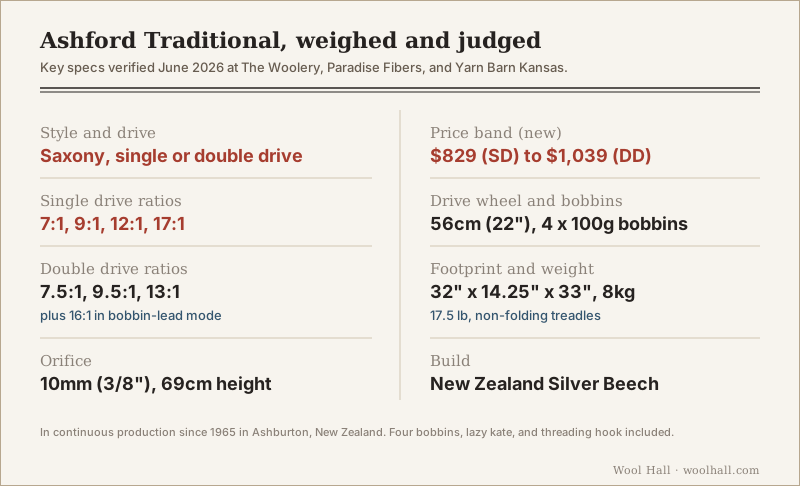
| Spec | Value |
|---|---|
| Style | Saxony |
| Drive options | Single drive or double drive (separate SKUs) |
| SD ratios | 7:1, 9:1, 12:1, 17:1 |
| DD ratios | 7.5:1, 9.5:1, 13:1 (+ 16:1 bobbin-lead) |
| Wheel diameter | 56cm (22”) |
| Orifice | 10mm (3/8”) |
| Orifice height | 69cm (27.25”) |
| Bobbins included | 4 × 100g |
| Weight | 8kg (17.5 lb) |
| Dimensions | 32”W × 14.25”D × 33”H |
| Left-handed version | Available (unfinished only) |
| Wood | New Zealand Silver Beech |
| SD Unfinished price | $829 |
| SD Lacquered price | $999 |
| DD Unfinished price | $879 |
| DD Lacquered price | $1,039 |
| Made in | Ashburton, New Zealand |
Prices verified June 2026 at The Woolery, Paradise Fibers, and Yarn Barn Kansas.
How long has the Ashford Traditional been in production and why does it matter?
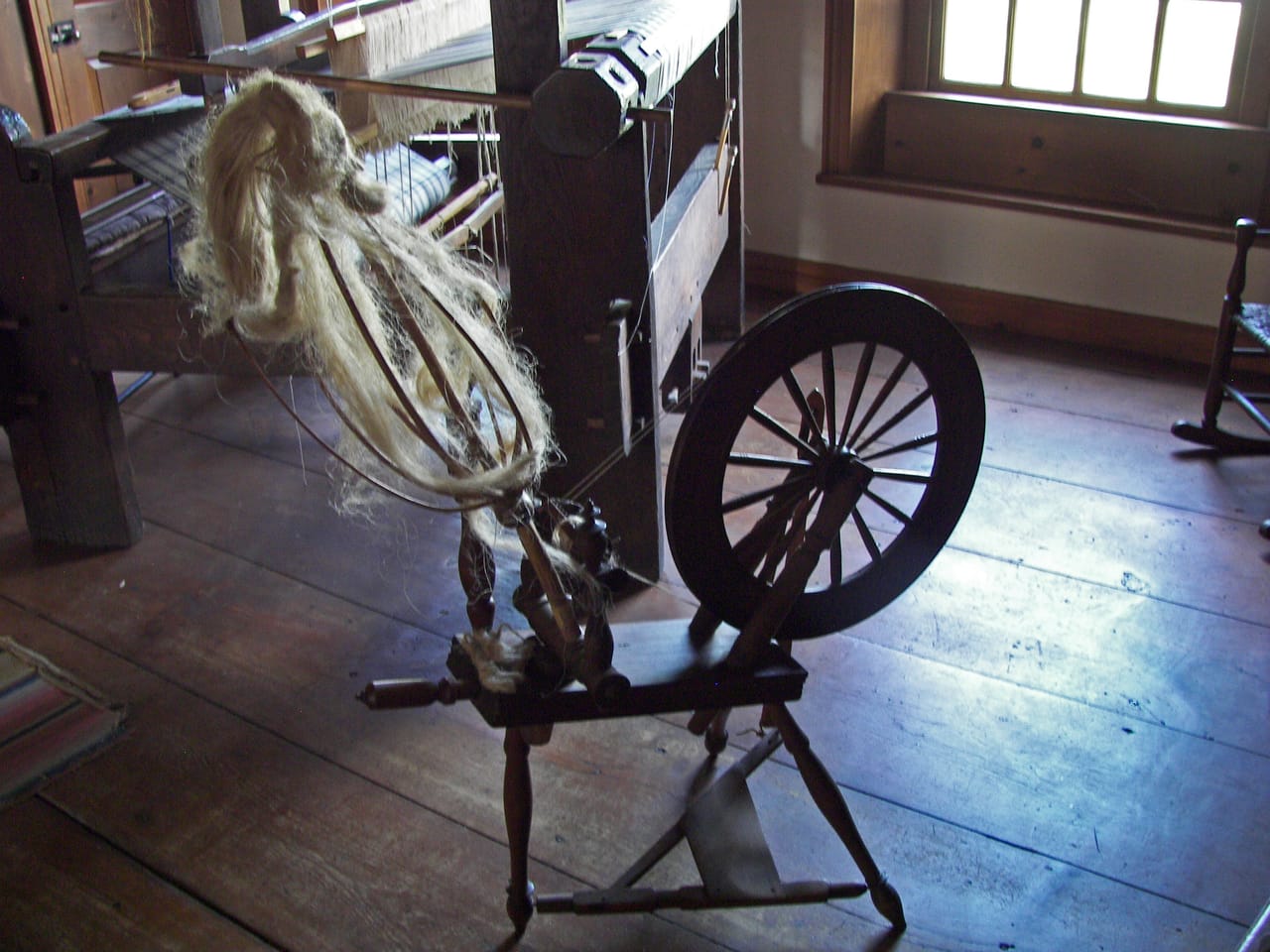
Sixty-one years. Ashford introduced the Traditional in 1965 from its Ashburton, New Zealand factory. Walter Ashford had started the woodworking business in 1934; the first spinning wheel, the Homecraft, came in 1942. The Traditional followed, and nothing since has replaced it. The 2026 Traditional is the same wheel it was in 1965 in all the ways that matter: same Silver Beech frame, same basic flyer-bobbin geometry, same whorl system.
This continuity has two practical consequences.
The first is parts. Ashford still supplies every replacement component for the Traditional from its current dealer network: whorls, bobbins, drive bands, flyer assemblies, treadle hardware, brake springs. A Traditional purchased in the 1970s can be serviced with components ordered today. This is not true of every wheel brand, and it matters when you are buying something you expect to use for decades.
The second is the used market, which is addressed in its own section below. Sixty-one years of production means the supply of working Traditionals in secondary channels is large and well distributed. A long-running model creates its own ecosystem.
What drive ratios does the Traditional offer in single and double drive?
Single drive offers four ratios on the standard whorl: 7:1, 9:1, 12:1, and 17:1. Double drive offers 7.5:1, 9.5:1, and 13:1 (plus 16:1 in bobbin-lead configuration, also called Irish tension, reached by removing one loop from the drive band so it powers the bobbin whorl rather than the flyer whorl).
The 17:1 top ratio in single drive is one of the highest in Ashford’s standard range. The Kiwi 3 reaches 9.5:1 on its standard whorl and 15:1 with the optional High Speed Whorl. The Traditional reaches 17:1 on its standard whorl with no upgrade needed. At 17:1, each treadle stroke inserts 17 twists per inch of drafted fiber, which covers fine merino singles, high-twist lace weight, and thin plied lace yarn without pushing the wheel to its limit.
The double drive variant adds the ability to switch between scotch tension and true double drive. In scotch tension, the drive band connects to the flyer whorl only, and a spring-loaded brake band controls bobbin take-up separately. In double drive, the same band wraps around both the flyer whorl and the bobbin whorl at different diameters, so flyer and bobbin are both actively driven. This gives finer control over how much twist enters the fiber relative to how fast the bobbin takes it up. For spinners working fine or very consistent singles, double drive is the standard choice. For bulky, art yarn, and most worsted-weight spinning, scotch tension is simpler and produces equivalent results.
How does the Ashford Traditional compare to the Kiwi 3?
The Kiwi 3 is the better first wheel; the Traditional is the upgrade. The Kiwi 3 is a castle wheel with scotch tension and a 9.5:1 top ratio at $799; the Traditional is a Saxony wheel with single or double drive and a 17:1 top ratio at $999. Both are made in Ashburton, New Zealand from Silver Beech, but they differ in almost every other dimension that matters to a buyer choosing between them.
| Feature | Kiwi 3 | Traditional (SD) |
|---|---|---|
| Style | Castle | Saxony |
| Drive | Scotch tension only | SD or DD (separate SKUs) |
| Top ratio (standard) | 9.5:1 | 17:1 |
| Wheel diameter | 45cm (17.5”) | 56cm (22”) |
| Bobbins included | 3 × 130g | 4 × 100g |
| Treadles fold | Yes | No |
| Weight | 5.5kg (12 lb) | 8kg (17.5 lb) |
| SD Lacquered price | $799 | $999 |
The Kiwi 3 gives you more bobbin capacity per bobbin (130g versus 100g), folding treadles for portability, and lower weight. The Traditional gives you more bobbins (four versus three), higher top ratios, the Saxony form factor, and an optional double drive upgrade.
The Kiwi 3 is the right first wheel for most buyers: forgiving scotch tension, folding for transport, and $200 less. The Traditional is the right second wheel for buyers who know they want either double drive or ratios above 15:1, or who specifically want a Saxony aesthetic rather than a castle design. The upgrade path from the Kiwi 3 to the Traditional is a natural one within Ashford’s lineup, and it is the most common step-up sequence the brand’s dealer network sees.
For spinners who pair their wheel with fiber prep tools: the Traditional handles the same range of wools, alpaca, and blends that the Kiwi 3 does, since both use the same 10mm orifice on the standard flyer. A drum carder or hand cards work identically with either wheel.
What does the used market look like for the Ashford Traditional?
Used Ashford Traditionals in good working condition typically sell for $200 to $400. That range reflects how common they are rather than their condition. Six decades of production created a large installed base, and many of those wheels have spent years or decades stored in closets, attics, and spare rooms after the original owners finished learning to spin.
Estate sales in New England, the Pacific Northwest, upper Midwest, and rural Canada regularly produce working Traditionals. Ravelry’s Fiber Marketplace classifieds, regional Facebook spinning guild groups, eBay, and Etsy all carry them. Estate sale aggregators like EstateSales.net list them in fiber arts regions.
What to inspect on a used Traditional: the flyer-bobbin assembly for cracks near the whorl attachment (the most stressed point); the drive wheel bearing, spun by hand to check for roughness or wobble; the brake band spring tension; and the treadle pivot. All of these components are replaceable from Ashford’s current dealer network at modest cost. A drive band costs around $12. Bobbins run $45 to $55 for a set of four.
A used Traditional at $250 that needs a new drive band and fresh bobbins is a working wheel for roughly $310. A new single-drive lacquered Traditional is $999. The used market for this wheel is one of the strongest in spinning because the supply is large and parts are universally available.
Is the Ashford Traditional the right wheel for you?
The Traditional is the right choice if you want any of: a Saxony-style wheel rather than a castle design; drive ratios above 15:1 without purchasing optional whorls; double drive as an option (available now or later by buying the DD SKU); or four bobbins included rather than three.
It is not the right choice if: portability matters (at 8kg and 32 inches wide, it does not fold or travel the way the Kiwi 3 does); you are buying a first wheel without a clear sense of what weight you spin (start with the Kiwi 3 instead); or you specifically need high bobbin capacity (the 100g bobbins on the Traditional hold less than the Kiwi 3’s 130g bobbins, and you may need to ply or wind off more frequently).
For spinners who have come through a drop spindle and an entry castle wheel and now work regularly in fine singles, the Traditional’s 17:1 ratio and double drive option make it the natural Ashford answer. For spinners focused on art yarn, bulky singles, or fiber prep-heavy work, the Kiwi 3 with a Super Flyer upgrade may be a better fit.
The Traditional is also a long-term purchase in a way that most consumer goods are not. Sixty-one years of continuous production means Ashford’s parts support is not speculative. Spinners who bought Traditionals in the 1970s can still order replacement whorls and bobbins from the current dealer network. A wheel purchased in 2026 has reasonable expectation of lifetime use with normal maintenance.
The Traditional is available through Ashford’s authorized US dealer network: The Woolery, Halcyon Yarn, Paradise Fibers, Yarn Barn Kansas, and regional fiber stores. The single-drive unfinished version is also on Amazon (ASIN B00JG5S692). For the rest of the Ashford spinning and weaving lineup, the Ashford Rigid Heddle review covers the brand’s floor and table loom side of the family.